




comments
Wednesday, January 13th, 2010Auckland, New Zealand
Of course individual replies are much more personal, but responding to readers’ comments and question in a blogpost is much easier. Even though we do not usually shy away from difficult, *easy* is good right now.
Oh you are here! Welcome home. How we will miss your travels!!
Us too 😉
Anyway, just wanted to say thanks so much for keeping your lovely blog all this time, it was wonderful to read while anticipating my own rtw and great to come back to after I returned! If I ever make it back to New Zealand (hard not to plan RTW #2, you’ll see) I’ll drop you guys a line. 
You’re right – we’re already talking timelines!
And if you do come back here, it would be GREAT to actually meet you face-to-face.
Or how about meeting somewhere else? Although we have a dreadful track record of meeting up with fellow blogging travellers on the road – we failed every time we tried to!
Hmmmmm…wondering, wondering when in 2010 we can get to that table for an international meal with you;-)
You name the day baby!!
That instant surreal did we ever leave feeling is my LEAST favourite bit about having travelled.
I was expecting to feel it was all a distant dream at some stage….as you point out it was an INSTANT feeling. This caught me by surprise. I thought it would all still feel fresh and close for a few days or even weeks, but it was gone immediately. Definitely surreal.
I live in the United States and I sent you a comment one time, about a year ago, as my family of 5 took a trip to SE Asia and when we were in Chiang Khong, Thailand, a lady on the street asked us if we knew you guys…do you recall this at all?
We sure do – we thought it was so funny! That’s the beauty of going to small out-of-the-way places, I suppose.
So, we are tentatively thinking of this route:
Denver, Colorado to Seoul, S.Korea, to Beijing, to Vietnam, spend time traveling throughout SE Asia, Bangkok to Europe and doing the motorhome thing (Like you all did) to tour Europe, and then head back home. (any feedback?)
All that in six to seven months? I find it hard to imagine going any faster than we did and we had over seven months each in Europe and Asia. Of course, if you are flying that will cut travelling times down significantly. I’d say, “Pick out the places you really want to see, and check that you will have long enough in them. Also, make sure you leave a few days up your sleeve for if you come across a place you absolutely adore and would like to linger in. At the end of the day, wherever you choose, you’ll experience something.”
Questions:
Is it difficult to buy and sell (and register…I remember your blog discussing this process being kind of hard) a motorhome in Europe?
Yes and no. From our research, we discovered Germany is the *cheapest* place to buy motorhomes. It is, however, difficult if you do not have an EU passport. If you have an EU passport (fortunately for us Rob has a British one), then you just need to waltz on in to the local paper-shuffling bureau, get yourself registered and then you can do anything. For this you will need a friend who will let you use their address – but you do not even need proof that you live there, so in that sense it is easy-peasy. If you have the friend in the first place, that is.
If you don’t have an EU passport, you can only buy a vehicle in Germany for export. What this means is that you have x weeks to get it out of the country and then it can never ever ever come back in (so you need to plan your route carefully). You need to re-register it another country – I would imagine at some cost and with a great deal of inconvenience. Be warned.
Not sure about other countries. Germany was the best for us because we wanted to use E-bay. If you can manage to buy, then selling is a breeze!
Do you know how much it would cost in Europe per day assuming we could purchase a motorhome?
I can only tell you what it cost us. Once we had the vans, our costs sat at about NZ$100 per day for absolutely everything – that includes parking charges and gas (and remember we had two vehicles so all that was doubled – and we travelled over 15,000km), repairs coz one van kept falling apart, food, attractions, postage, phone cards, internet, countless tubes of shoe glue, toilet paper, absolutely everything.
That’s about US$75 or 50Euros for ten people per day. You could of course spend a lot more – eating out even once a week would boost the figure immediately. We kept our costs pretty low, but you could probably spend less, by not travelling so far (although there’s bound to be someone out there who can tell you how to do Europe on a dollar a day – we didn’t manage to).
Are there any countries you would not include: China, S.Korea, Vietnam, Cambodia, Thailand, Europe (not sure where we would go in Europe)…
Personal taste answering here…..We preferred Laos over Cambodia. Ho Chi Minh City was our favourite in Vietnam – for the sheer speed and volume of the traffic! It’s not easy to forget seeing a line of six motorbikes approaching you on the pavement. It’s not easy to forget being stuck in the middle of the road when the traffic lights changed and everything surged forwards. Loved China, especially the wall, Xi’an, Yangshuo and really especially Yangmei. Haven’t been to Korea. Did you love Thailand so much that you’d be going back again instead of to somewhere different? Europe. Loved that too. You’d need to decide WHY you want to go there – what’s your purpose? History trail? Med beaches? Mountain hiking? Gourmet food? Then we can talk some more!
We are now planning a second big trip with our 2 sons (7 and 1), ….thus the admiration and fascination and education of your blog!!!!! A caravan or motorhome is in our future trip too, and we are going to try and do mostly Europe. We are now buying gear and such for our trip, and was wondering what items you brought but didn’t need, and which ones you wished for?!? I am *certain* that I am over thinking everything and going to bring too much…lol!! Travelling as a couple is much ‘lighter’, and we could wing it back then….but now, I don’t want to be caught without some ‘vital’ item for the kids in the middle of nowhere at night?!!
Adults don’t need stuff. Kids don’t need stuff either.
We took too many nappies/diapers, but the peace of mind was reward enough – imagine if we’d not been able to get them dry and had to use disposables!!!!!! Anathema!
We also had medication that we never used, but again, I was happy to carry it.
Other than that, you can always buy whatever you discover you really need – and if you can’t buy it, you can be assured the population wherever you are is also managing to live without it!
What sorts of things have you been getting rid of in particular, or have you got rid of items from all areas?
We had thirty beach towels, and had not bought one of them ourselves. We told everyone to choose their favourite and we gave away the rest. Voila, a whole shelf free in the linen cupboard!
We had a yoghurt maker, which we hadn’t used for donkeys’ years. I decided we should at least make use of it if we were going to keep it, and so threw our first batch of yoghurt in it a few days back. It didn’t work. Next I tried our tried and trusted wrap-it-all-in-a-woollen-blanket method with resounding success – the kids even said the resulting brew was Just Like the Greek Stuff. High praise. Goodbye yoggie maker.
Books. We simply have more than we can read and so we are only keeping The Best.
Uncomfortable chairs that no-one ever wants to sit on. Ringbinders. Tools we don’t use. Sheets with holes. Too-big clothes. Toys. Crayons no-one draws with.
Also, how do you manage boxes of used clothing waiting for smaller children to use? Or do you children wear things out before growing out of them?
I think the trip was the first time our kids actually wore out clothes before they grew out of them! As for the first question, we keep old clothing in banana boxes and stack them up in the wardrobe to be sorted through at the beginning of each summer and winter.
And how do you keep art work stuff (paper, colouring/activity books, pens, pencils, stamps etc etc) in order?
I don’t; it’s the kids’ job. Though I *do* find myself nagging about it. Which probably means we need a better system.

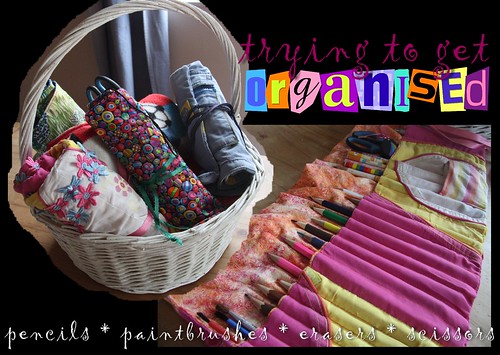
everyone has their own personal pencil roll made out of their old clothes
How do you decide what toys to keep?
It has to be loved and played with. Unless it’s Lego, it will preferably be made from natural materials, and even better if made by hand. I find it very hard to throw away dolls’ clothes the children have made! I like toys to not have batteries and to encourage imaginative play (so, for example, I prefer wooden blocks over a Disney themed character that can only fly through space with lights flashing).
I am currently struggling with the fact that our kids have so much in comparison to The Rest Of The World (and how do you cut back?) – but at the same time I am aware they have far less than many of their peers (and do they *need* to cut back?)
We managed to avoid the Christmas deluge of gifts this year by staying away until after the silly season, and then buying bunks as a family present!
Do you think GRANDPA would share his recipe for his scones?
Straight from the book every Kiwi Kitchen has, the Edmond’s cookbook, and he stresses, you must cut in the butter with a knife to keep it cold:
3C flour
6t baking powder
1/4t salt
Sift into a bowl
75g butter
Cut in until it resembles fine breadcrumbs
1-1 1/2C milk
Add milk and mix quickly with a knife to a soft dough. Knead a few times.
Lightly dust an oven tray with flour. Press scone dough out onto this. Cut into 12 even-sized pieces. Leave a 2cm space between them. Brush tops with milk. Bake at 220*C for 10 minutes.
Optional extras:
* add grated cheese and a pinch of cayenne pepper and mustard powder
* add 1T sugar and 1/2t cinnamon to flour and then 3/4C chopped dates
* add 3/4C sultanas
if you feel the urge please share any other recipes from your travels, I’d love to try them with my family.
When we wrap up this blog (which we were planning on doing on the day Rob returned to work, but it seems to still be stretching out a bit), we’ll be transferring our writing efforts to a blog we worked on for a while before we left. While it will contain references to our travels, it will not be a travelling blog. In fact, it’ll be quite the opposite – recording our efforts to get as local as possible in the kitchen (while still incorporating exotic ideas). So….drum roll…..reintroducing…..have pinny, will cook.
Here are what would have been today’s offerings if I hadn’t written here instead (stewed plums, plum and apple chutney, cupcakey thingies and our fruit-n-yoghurt breakfast):

i just told fraser that you’re about to get on a plane, and he said, “where?” and i said, “NZ” and he said, “oh… they’ll definitely be off around the world again soon…” X
We hope so.



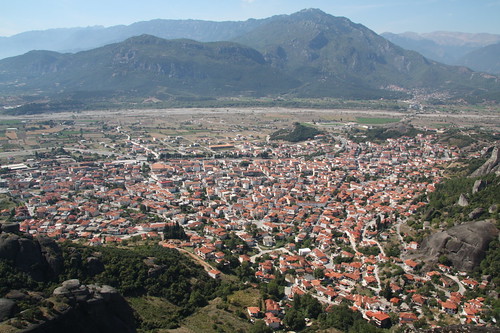
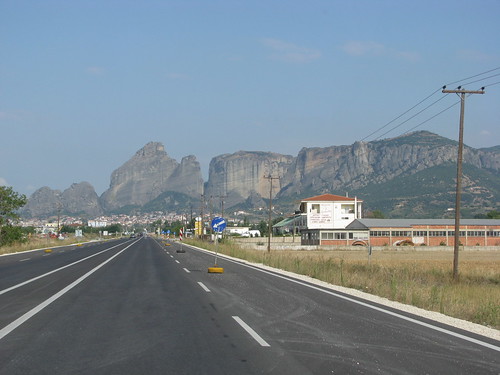 the approach along a long straight road across the plain
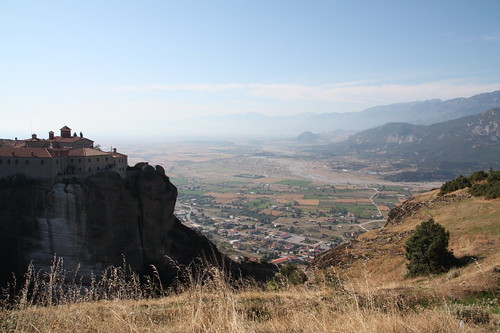
 rayres