


One Country, One Entry: First of a Series
A little of Turkey is in Europe. By some definitions Georgia, or even Armenia are in Europe. But Bulgaria was the first clearly, firmly, non-Asian nation on our trip.
Because of the time pressure discussed in the Turkey entries, we were really making a flying trip through the Balkans. We would have liked to spend two or three months covering the ground between Istanbul and Vienna, but actually had a mere two weeks. This allowed us but three days and a single real stop in Bulgaria, in the country’s second city, Plovdiv.
While we would have loved to spend some time exploring the Balkan mountains and their villages in the heart of the country, I think our choice turned out to be a good one. Even down on the plains, Plovdiv was where we got our first real taste of winter. Our bus arrived at 05:30, meaning that our first couple hours in town were not only very chilly (under 5C) but also dark.
Once the sun rose and we were able to get outside we changed some money and went for a walk around town.
Central Plovdiv is a really cool place!

Central Plovdiv from one of the city’s six (originally, in Roman times, seven… one was completely quarried away for building materials) hills

Plovdiv (or Trimontium as the Romans called it)’s amphitheatre
The city is the longest continuously inhabited place in Europe, with traces of settlements 7500 years old found within the city. And things have been pretty busy since. The city’s lovely 19th century pastel coloured buildings surround Roman ruins that have been excavated and semi restored, including a small section of a 600m long, 50m wide stadium and a 30-some row semicircular amphitheatre that’s still used for concerts today.
Of a more modern era, but almost equally cool, was the gallery of dozens of famous Bulgarians spray painted onto the side of one of the rocky hills that rise up out of the city.

A street in central Plovdiv looking positively summery! Once you got a bit of sunlight on it is was pretty comfortable but before that boy did it feel cold. I think I may have forgotten how winter works. But given that we were in -35C in Harbin only 10 months before I’m not exactly sure how that could have happened…
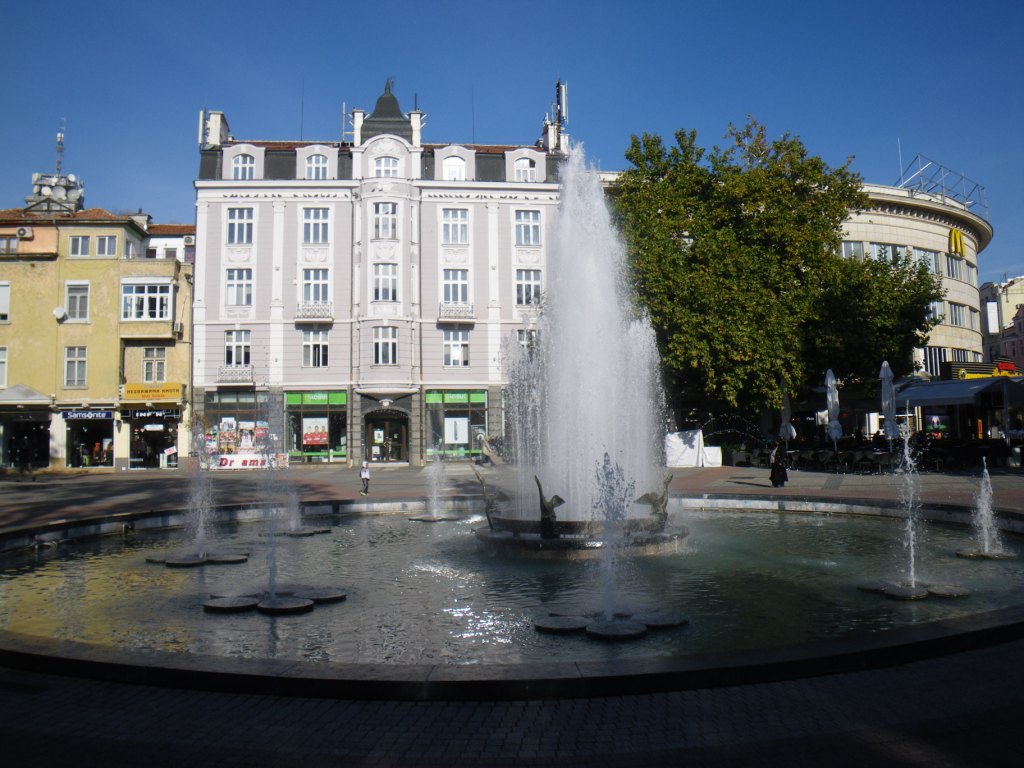
The nicer of Plovdiv’s two central squares. The other one is actually okay when the sun’s out, but whatever their other successes and failings may have been, pleasant architecture and urban planning was not a strength of eastern European communists

Plovdiv was just such a NICE place to spend a few days. It gave us a fabulous first impression of the Balkans and we were almost immediately drawn to thinking that we really had to get back some day when we had a bit more time to spare.

Me having some cheesy bread for breakfast. Everyone else seemed to be eating pizza. Which, now that I think about it, is really little more than cheesy, tomato-y bread…

Some of the best “graffiti” I’ve ever seen. Right up there with the university tunnel in Xiamen, China

New adventure sport: Extreme Dental Hygiene!
And somewhere in between were the medieval churches and merchant houses that we visited in the afternoon after we’d met Natasha for lunch.
Speaking of which, Bulgarian food is a tasty mix of Greek, Turkish, Russian and Central European influences, making it quite diverse. It’s also (at least at the places we had a look at) very inexpensive! Lunch for three with a beer each came to about US$10!
Hopping back to our discussion of the city itself, the ornate building style used through much of it is striking, as were the many instances of church walls and ceilings covered with biblical scenes. Unusually, there seemed to be a lot more focus on the old testament than you’d find in most other Christian churches. Sarah and I often entertained ourselves by wandering around, heads tilted ceiling-ward trying to identify which stories were being portrayed… Is that Pharoah or Herod killing having the babies killed? Ah… that must be Saul on the road to Damascus! Oh, and that guy with the sea monster looking thing is Jonah for sure. Hours of fun!

New house.
Old houses. And a belfry. I want a belfry.
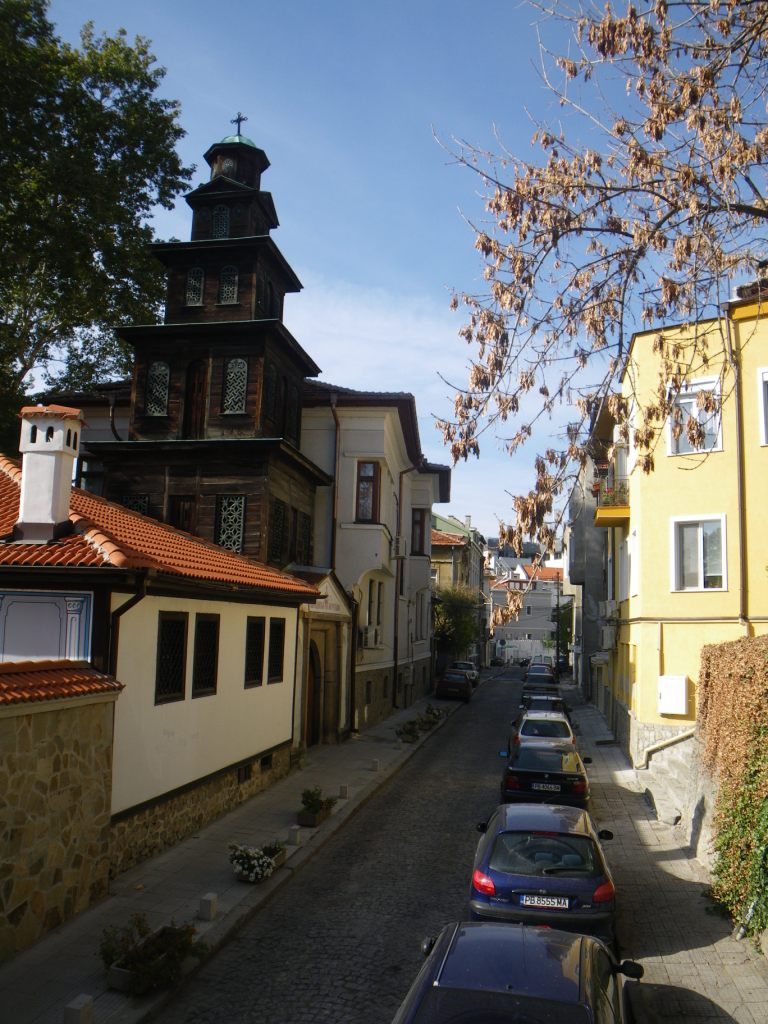
And middle aged commercial buildings.

Some of the aforementioned frescoes. The one on the right is clearly Moses coming down from Siani. Anyone know what the other one is?
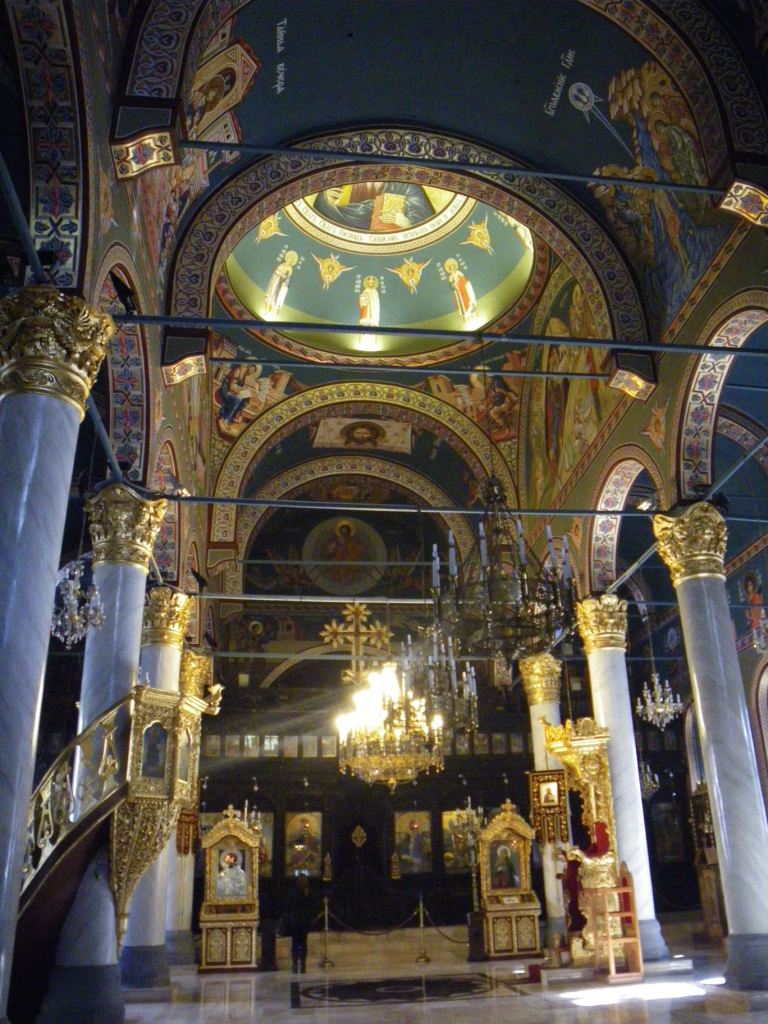
Almost all Bulgarian churches forbade photography (as well as mobile phone use) inside, but this one was kind enough to allow us to take a pic (or at least to not expressly forbid it.)
In a similar vein was the museum of icons we visited, also that afternoon. The Bulgarian orthodox church, like that in Georgia, makes a big deal of paintings of saints and holy figures. In many cases these paintings are reputed to have the power to heal the sick or to answer other prayers. The most famous ones often end up “dressed” in silver or gold ornaments and attract pilgrims from far and wide.
To continue the jumping around both historically and chronologically, I’ll also mention our visit to the town’s highest point, the ruins of the Bronze Age Thracian Eumolpias fortress. As we climbed up to the top we were approached by a middle aged man who started chatting away in English and pointing out spots on the hilltop, indicating that this or that would be a good spot to take photos. Situations like these always make me feel uncomfortable. You know that the guy is going to ask you for money soon. When his request came it was accompanied by a narrated and printed story about how he’d used to be a skilled builder, but was injured while helping a friend paint a ceiling and could no longer work, and was only two days away from getting evicted from his apartment. This made the dilemma particularly tricky. True, we hadn’t ASKED for his “services,” but he seemed a nice enough guy. And if his story was true, I’d be happy enough to help him out. But then if it WASN’T true, I’d be completely loath to encourage his preying on the kindness of strangers. We ended up giving him a couple of Lev, about $1.60.

Because of Plovdiv’s tremendous antiquity, pretty much any place in the town has the potential to be transformed in to an archaeological dig. I suspect this is someone’s house renovations going on

Probably the grandest of old Plovdiv’s houses has been turned into the ethnological museum. Which was closed while we were there.

A church with a tower.

And one of the icons.

Another church with a tower. Can you tell I’m a bit tired of writing photo captions?am
That evening we met up with Natasha again and headed home for dinner with she and her son, Kyril. We had a fun night, with Natasha and us chatting away about our respective world travels, and Kyril occasionally joining us to add a brief but loud rant about his Anarchist politics and recent protests he’d been a part of in Bulgaria.
Day two in Bulgaria was a visit to the Bachkovo monastery some 30km south of Plovdiv, easily managed by public bus. Bachkovo was originally built the twelfth century, and was one of the bastions of Christianity during the 500 years that the Ottomans ruled Bulgaria. As historical a place as it was, I’m sad to say it actually felt a bit underwhelming. It wasn’t very big. Most of the grounds were off limits to visitors, and the parts that were visible (e.g. the main church) gave only brief glimpses into the antiquity of the place, most of it being either recently reconstructed in relatively modern style, or severely tarnished by the ages (e.g. the soot covering the frescoes inside the church.) Bachkovo appeared to be first a place for monks to live, second a place for pilgrims to visit and pray to the icons, and a fairly distant third, a place for keeping alive the physical manifestations of ancient Bulgarian Christan tradition. All of this meant that it really wasn’t that fascinating a place for secular tourists.
Which is, of course, fine. Though it was a little difficult to square the ban on photography inside the monastery buildings and courtyard with the satellite dishes on the newly varnished wood railings on the upper floors surrounding said courtyard.
That said, the trip was still definitely worthwhile. It allowed us to see a bit of the foothills of the Balkan mountains; it would have been a shame to dash through the region without ever seeing the mountains it was named after! And going out for a walk on one of the hiking trails through the mountains we found some beautiful forest. A couple of kilometres into the woods we came across a lovely medieval church built amongst the trees over top of a burbling freshwater spring. To us at least, this place was far more pleasant and attractive than the main monastery itself.
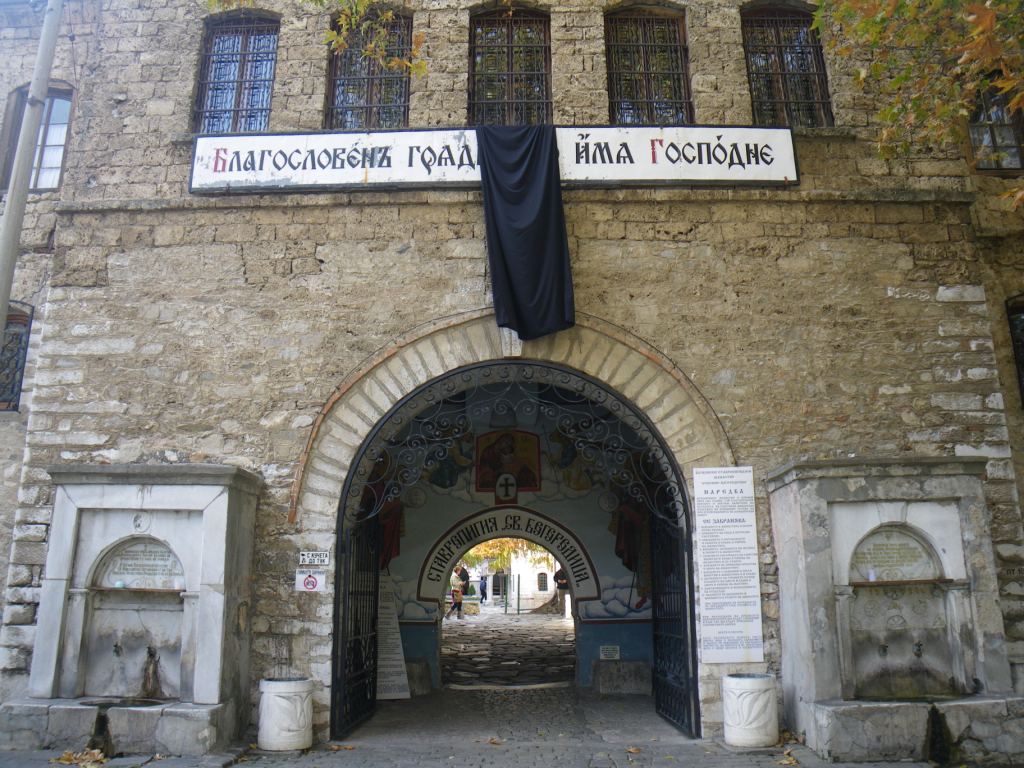
The entrance to Bachkovo monastery

Up into the mountains
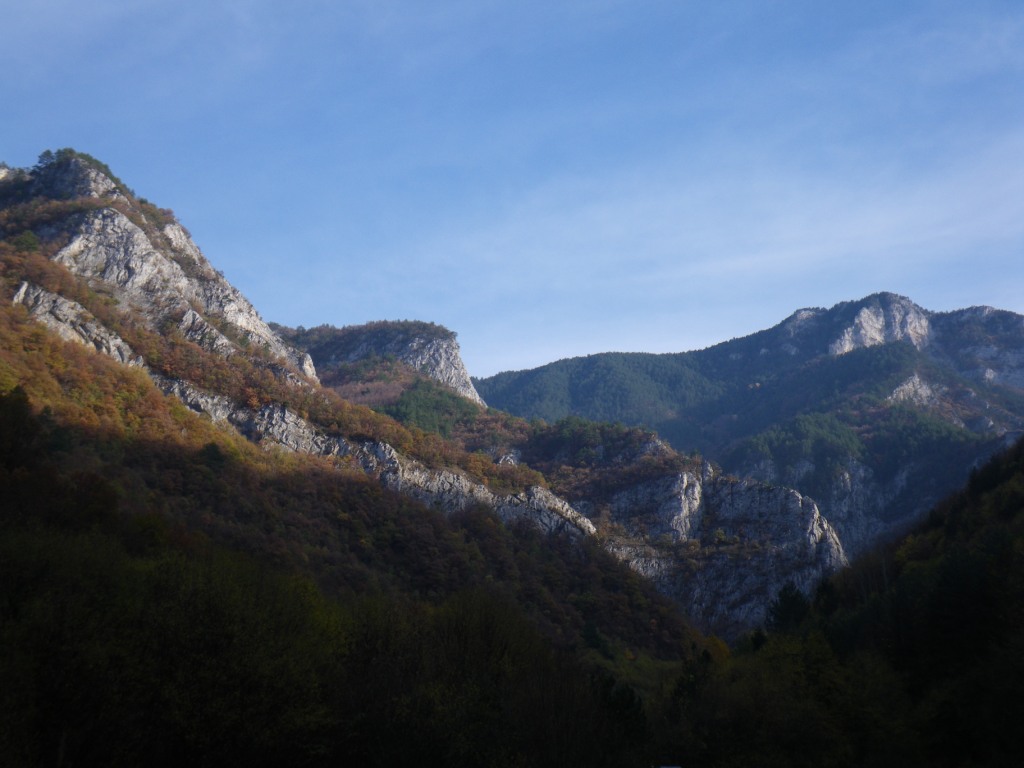
The foothills of the Balkans
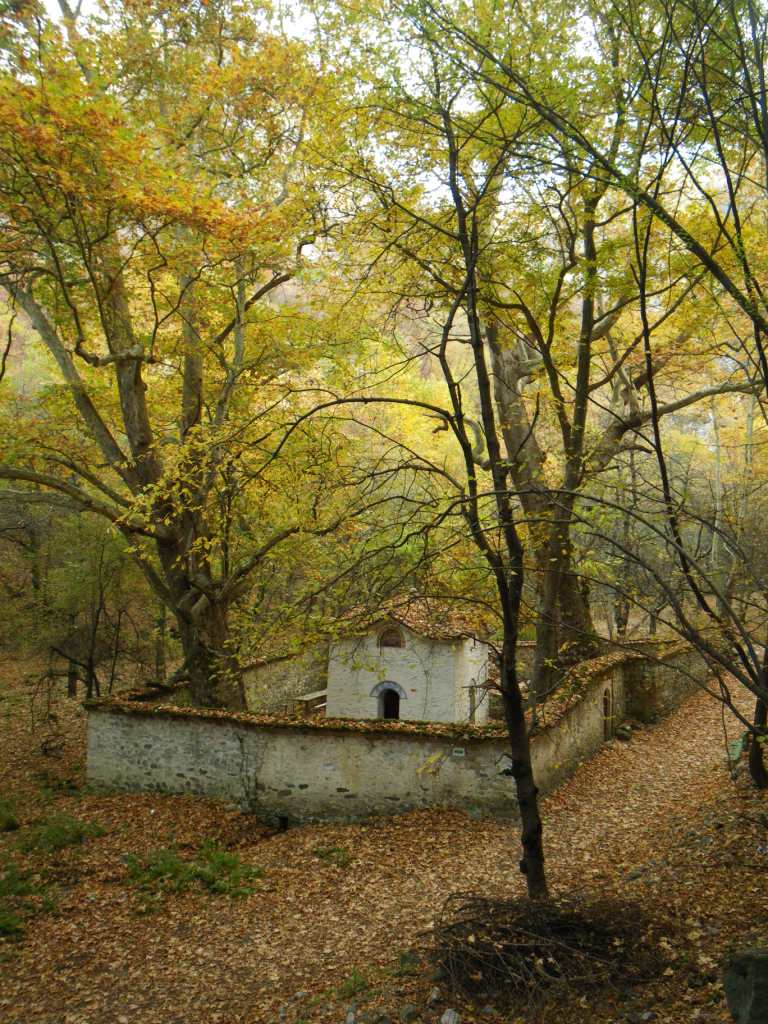
The chapel in the forest. From the candles and photos inside it appeared that it got fairly regular visitors
At home that evening we prepared dinner for our hosts and had another grand old time talking with Natasha over a few beers and glasses of wine.
Next morning we caught Natasha just before she headed out the door to work. Soon after we were on our way as well, headed to the train station to buy tickets and start the journey north.

For some reasons our only photos of Natasha are ones where she is pulling funny faces by accident or has her eyes closed. But we CAN show you a photo of the beautiful cinnamon sugar borek (filo pastry) she left us for breakfast the morning we left 🙂
Buying the tickets was a curious process. We’d visited the station on the morning of our arrival and been informed that A. it would be no problem buying tickets for a journey to Belgrade on the day of departure BUT B. they wouldn’t know if there would be sleeping cars on the train until the morning of our departure and we’d have to make a reservation for one then if their were. Either the Bulgarian railways have very poor communications between departments or very poor management of their rolling stock. Which do you think?
As it turned out, their WERE sleeping cars available for the Sofia-Belgrade leg of the journey, so we reserved spots, then took a local train up to Bulgaria’s capital, departing at noon so we’d have a bit of time to look around before our 22:00 departure from there.

A country station on the way to Sofia. Rural Bulgaria looked quiet. We saw several horse drawn carts trotting along beside the train tracks

Sofia Central Station
Sofia was a bit of a bust. It was a grey afternoon in a grey city. We visited the Lonely Planet’s two “must visit” attractions in Sofia and weren’t particularly inspired by them. The memorial to the Soviet Army had been turned into a skate/BMX park (which actually DID make it kind of an interesting place I suppose.) And the Aleksander Nevsky memorial church was, while grand and pretty, still a bit of a letdown for the main attraction in a European capital city. No doubt this was also because we’d been in the Aya Sofia a few days before… Nevsky’s grand domed hall and frescoes actually WERE quite impressive, but compared to the size and space and golden mosaics in Aya Sofia they kind of paled. Though there’s no shame in not outdoing the grandest church in the world I suppose…
The brightest spot was probably our visit to a brewpub to pass our final couple of hours before our train went. While they had only a single beer on offer and it as merely adequate-tasty, the place scored in two other categories (which takes some doing, because from my perspective if the beer isn’t up to scratch it’s tough to redeem yourself):
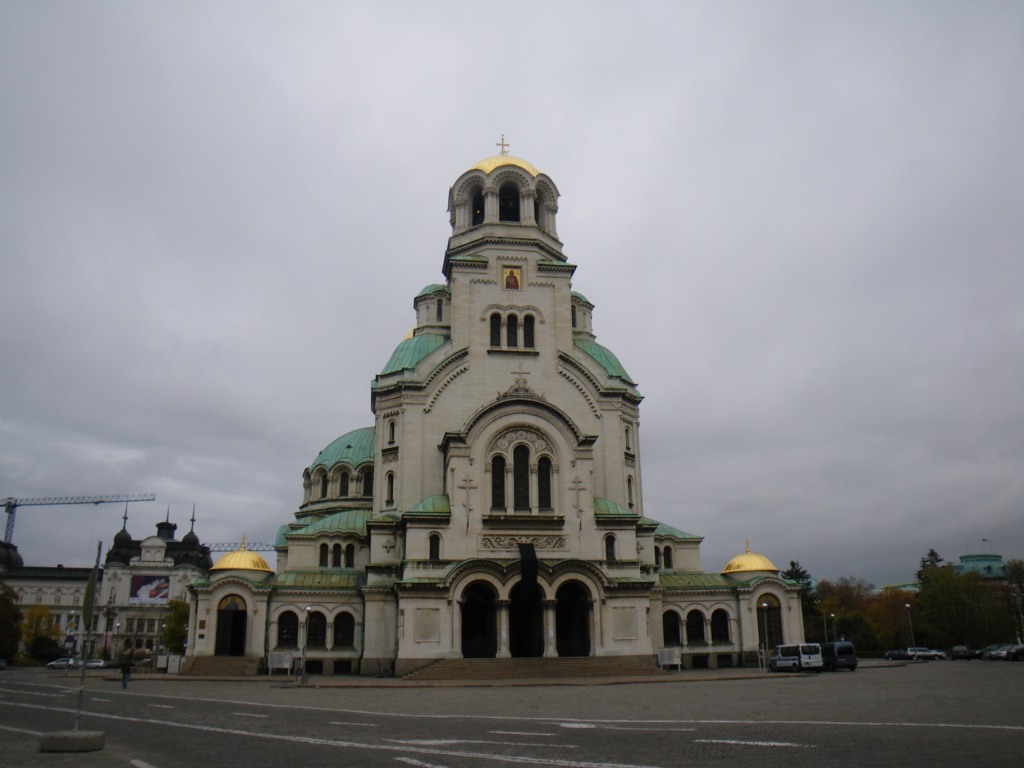
Alexander Nevsky church. I’m unclear on why a medieval Russian prince gets a church in Sofia named after him. It’s true that he was instrumental in making Russia the country/empire it became, but… Russia. Not Bulgaria.

One (figurative and literal) bright spot of Sofia was its street art, which continued where Plovdiv had left off

This one was in front of a church. Irreverent? Pious?

Aw man, did you see that Blunt to Fakie I pulled underneath the hugging guy with the submachinegun?!
The food: which was reasonably priced and very tasty
The serving system: each table had its own tap with a volume-meter that customers could refill their glasses from, paying for the total volume consumed at the end of their visit

Nothing like pouring your own from the tap. I really need to get a kegging setup next time I’m in a position to be brewing.
Thus cheered and fortified we headed back to the station.
Finding our train once we got there was actually a wee bit difficult. Primarily because the train itself was so small that I couldn’t believe it was actually the one we were looking for. An international service between two capital cities that consisted of TWO cars. One sleepers, one seats. Though I suppose the fact that pretty much no one seems to USE the train explains this. Sarah and I had a four bed sleeper berth to ourselves. It was old and not perfectly clean. But at the same time, the 1960s decor (faux wood panelling and green velvet upholstery!) meant that it was kind of fun. And it wasn’t filthy or anything, so we actually had a fun time eating gummis and pretzels and drinking our takeaway beer until we arrived at the Serbian border around 22:30, after which we were able to get to sleep, resting up for our early, early arrival in Belgrade.
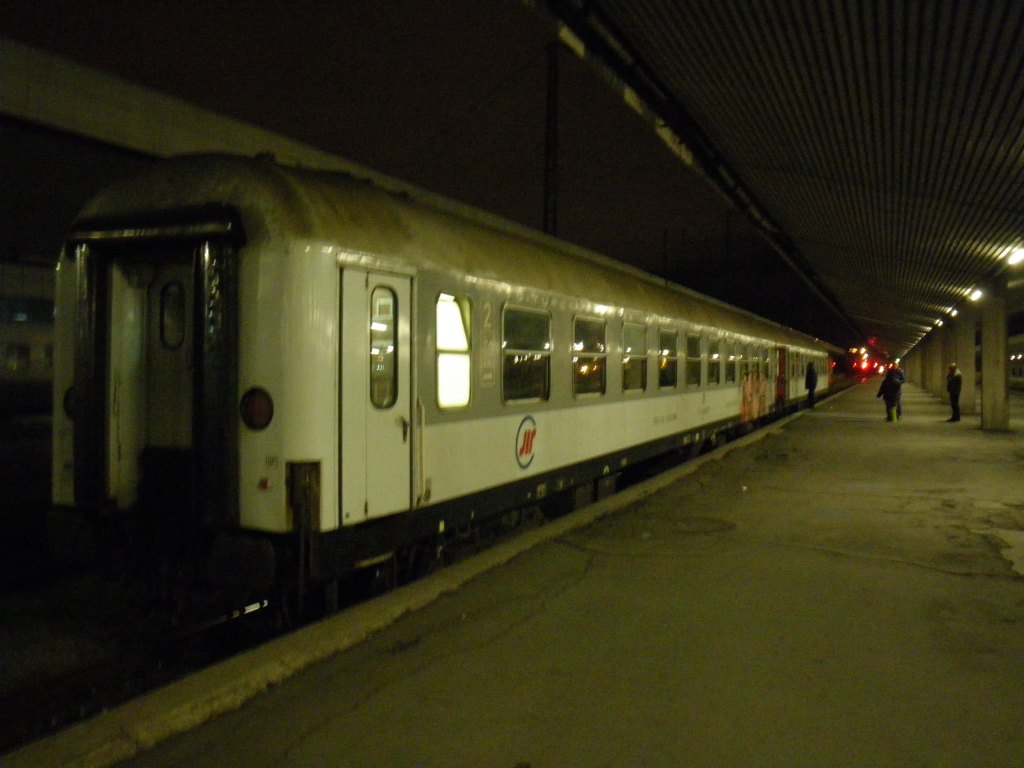
Is that really our train?

It was common practice in Bulgaria to post death notices in places frequented by the deceased (in this case, a church, which helps to explain why there were so many of them.)
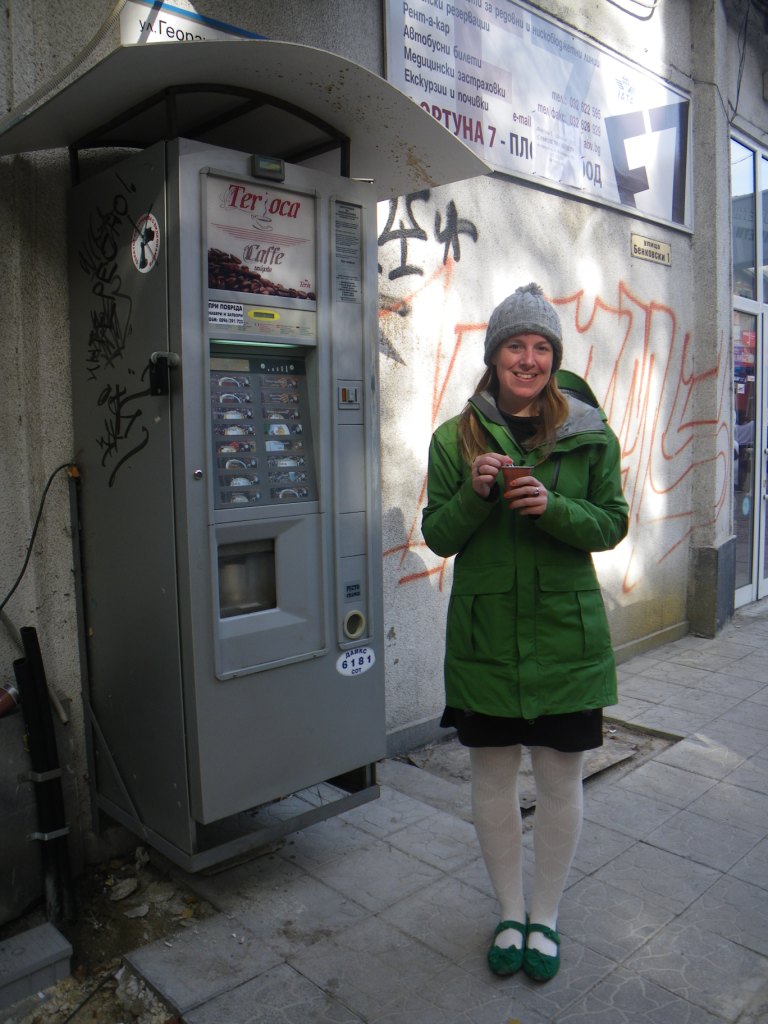
Sarah with a coffeefee. An actual espresso. From a vending machine. For NZ$0.40!
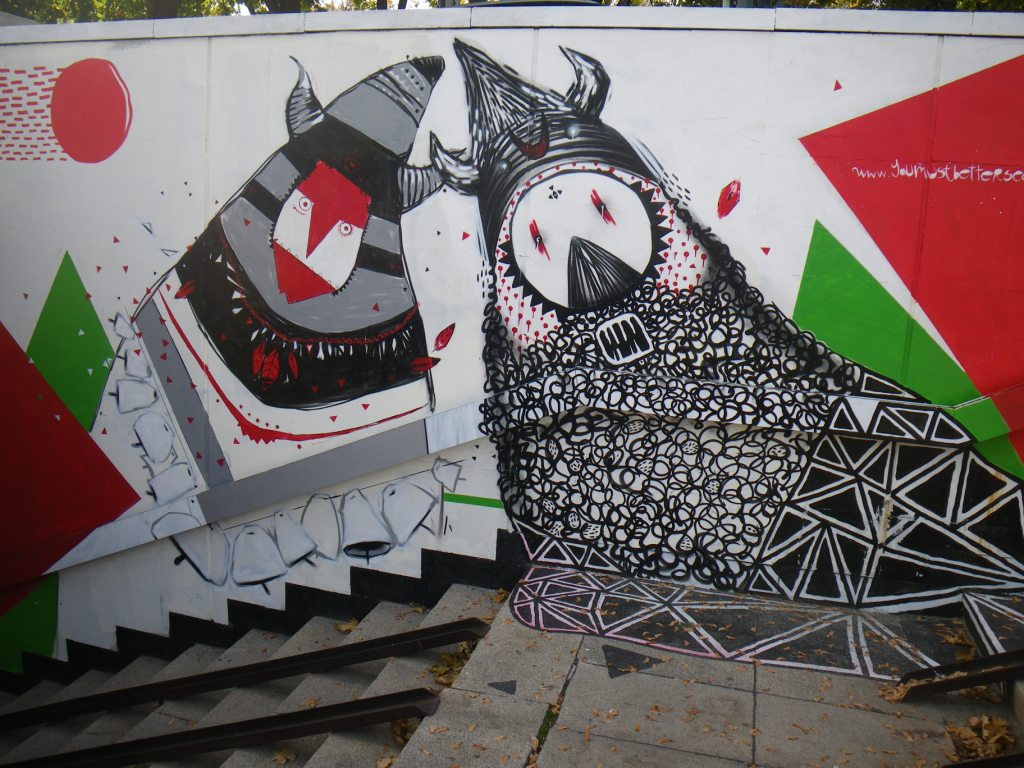
More fabulous graffiti.

And more! I love how one of the guys is examining a spray cap!

Plovdiv’s communist era main square putting on its best face
Tags: Bachkovo, Bulgaria, Llew Bardecki, Plovdiv, Sofia, Travel
 llewtravel
about Alexander Nevsky chirch. Russians and Bulgarians are the same people with long history. A.Nevsky was not building empire, he was protecting his country from pope gregory ix’s crusade, for what Alexander had been made a saint. The chirch was built by russian architect and given name of the saint.