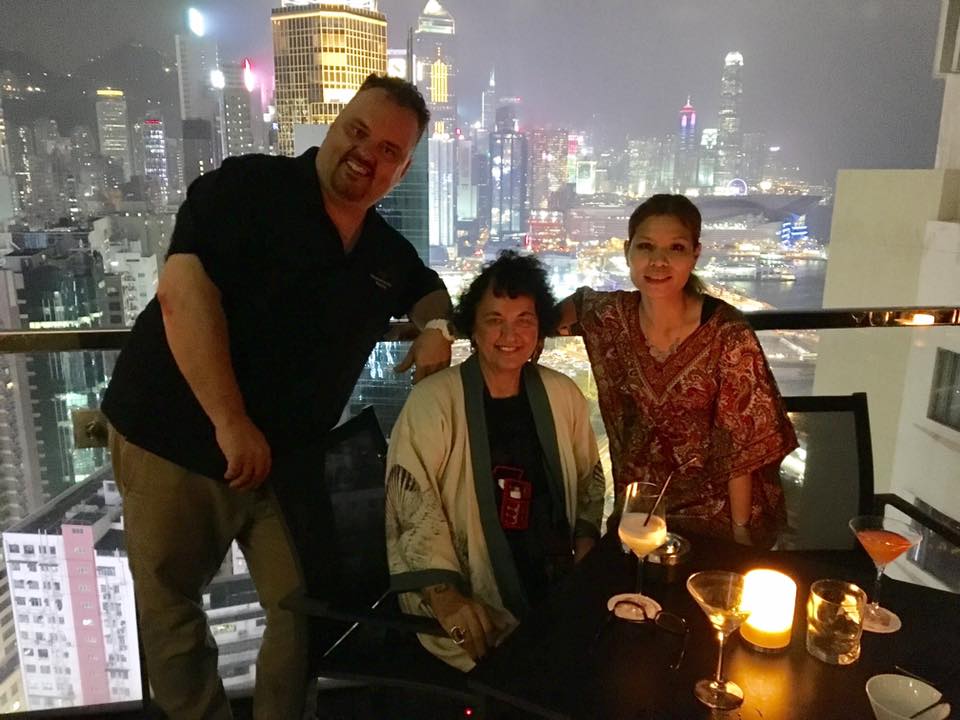



Finding The Heart Of Each Day
Before I began backpacking for 4 years in 2002, after retirement as a lobbyist, administrator and educator, and with my three boys grown and out of the house, a friend asked me to “report back to those at home what travel reveals about the human heart and what we have become in this world. To look beneath the surface of things to the heart of each day. Does hope exist? Are people still falling in love? Is everyone buying death as if it were cheap socks at a smoke sale?" I take this on. I look for clarity. I look for signs of courage…of strength of conviction rooted in heart…in an authentic identity, in myself as well as in others. I look for cheap socks…and death for sale. Regardless of their circumstances, I have found all this and people loving their friends and families. And laughing. Since 2006 I have been a foreigner living in Oaxaca Mexico...again finding both sorrow and joy. This blog is intending to keep family and friends apprised of my whereabouts, goings-on, world-watchings and idle thoughts. Anyone else who finds their way here is welcome to leave comments. Click on the thumbnail photos to enlarge them.
David’s Tribute
December 5th, 2017David wrote a beautiful tribute to his mom.
She left the last minutes of November 20
I imagine her walking beautiful and smiling accompanied by the revolutionaries of a century ago to glory
With a smile on her lips
A difficult and beautiful life
Of suffering and happiness
From You I learned to love Mexico
I remember as if it were yesterday when I went to the market we went through the Zocalo of Oaxaca
This city you chose to be our home
The cops raised the flag of Mexico on their flagpole
And you made us stop in the middle of the square
Respectfully, as she never did before, the image
At that time we still did not know that our flag was in the hands of traitors
That I would share with you many years later.
And you believed me and supported me unconditionally until the last day
All I owe her, what I am is a pale reflection of her dreams and her stories about my grandfather in Sola de Vega
Now I have your love and your advice
You left but you don’t leave me an orphan
I have a mother for the many lives like mine
See you soon mommy and tell us beautiful stories
Thank you so much mother Victoria Reyes Gopar
The Funeral Tepete
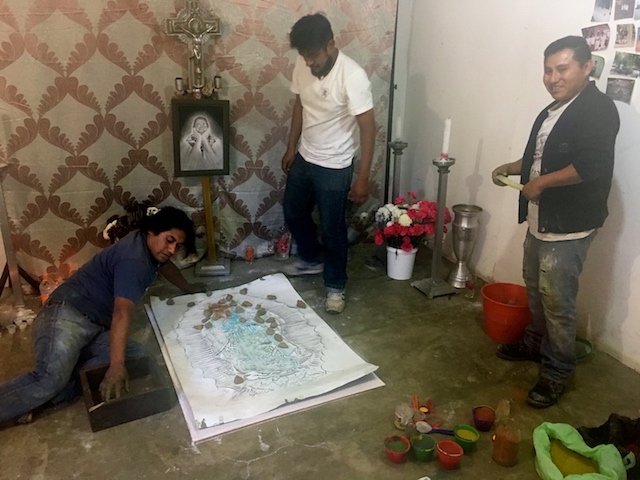
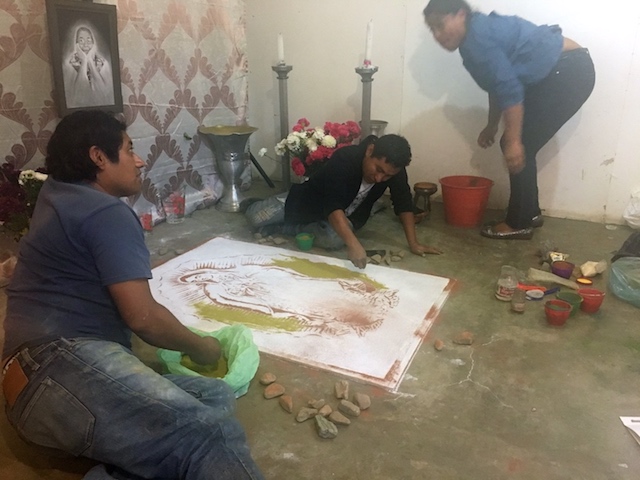
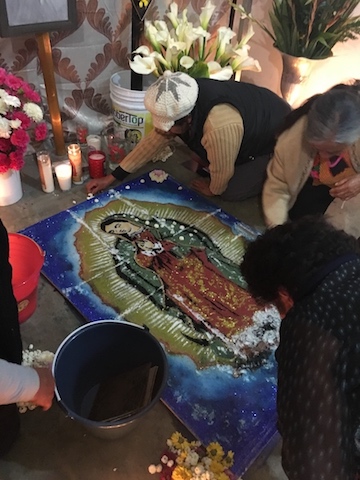
December 5th, 2017On the 9th night of prayers for David’s mom, David and Gayo and another friend spent the afternoon building a sand tepete. After the prayers, the sand tepete, symbolizing the building of “a long and difficult life, is swept away quickly at the end.”
9th Night Friends
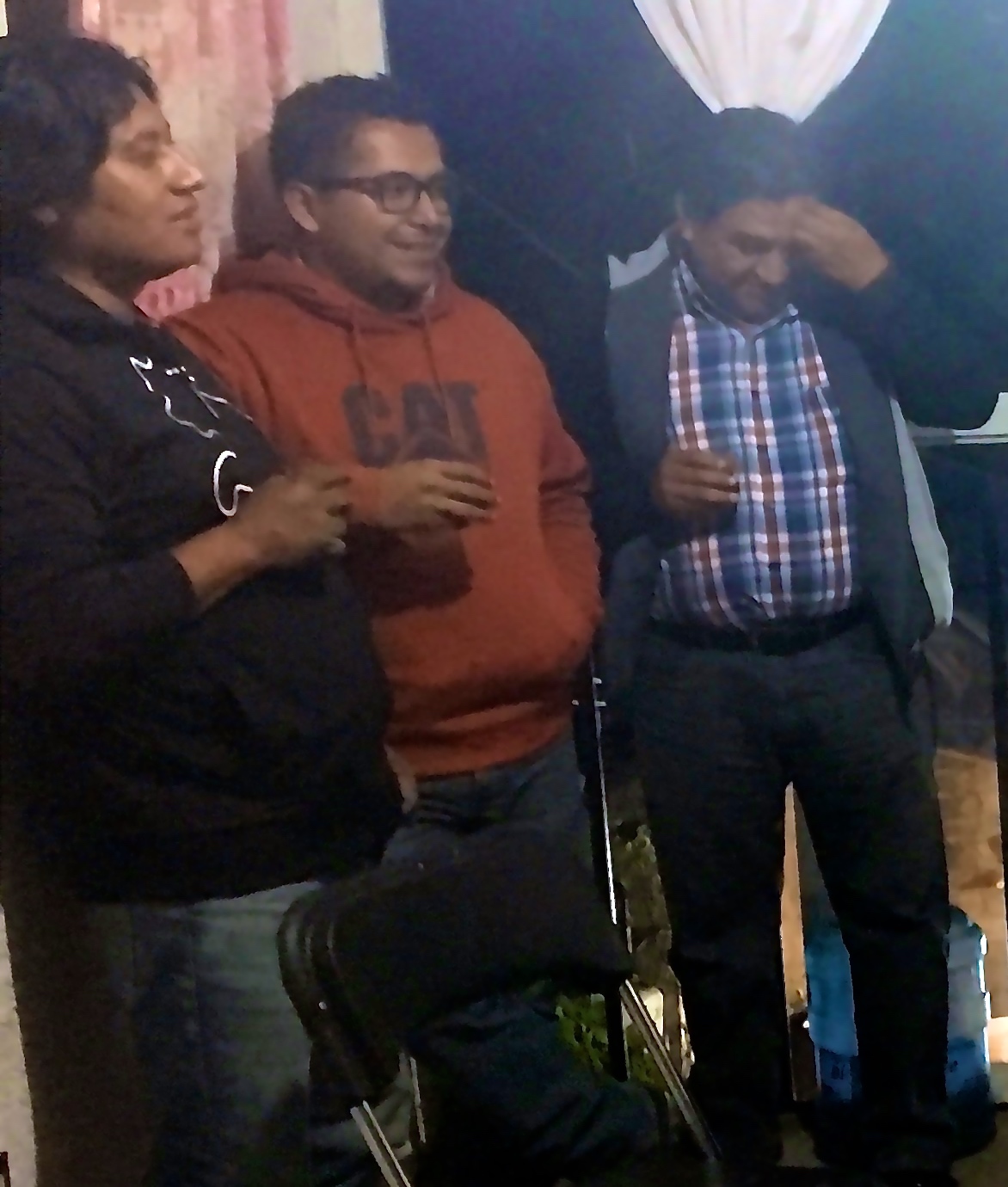
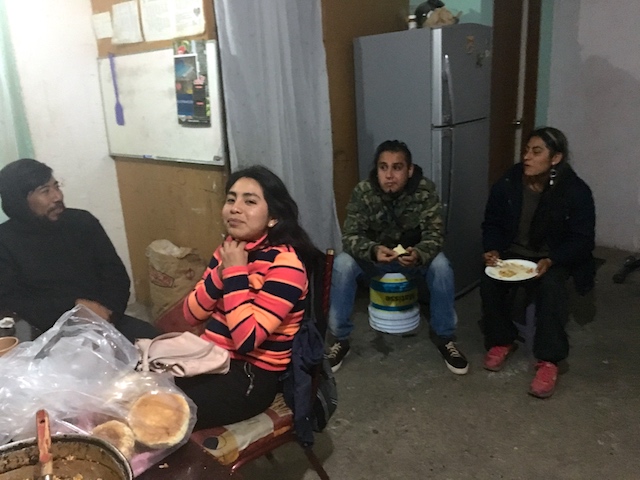
December 5th, 2017David’s mom died on November 20. The body was placed in a casket midst flowers and lit candles the first night and then was buried with a whole busload of people going to the cemetery. Then every night for 9 nights friends and neighbors came to the house for prayers, singing and food.
On the 9th night of David’s mom’s remembrance;
lst photo Gayo, Jaz and Manuel
2nd Photo Tellez, Cholo
3rd Photo David, Beto, Tellez

A Hospitalization And Death
November 21st, 2017The public hospital is like a jail!
Once you go in you can’t come and go. They demand a family member stay with the patient at all times. He took night shift from his siblings and had to sleep on the floor. Couldn’t take in a blanket or mat. Couldn’t take in food for himself because she was fasting for tests and they don’t trust the family member not to give the patient food. Armed guard at the gate.
Anyway, David’s mom died last monday. Got pneumonia in one lung…probably contracted in the hospital. I was up with David all night helping deliver her papers, getting a casket, shopping for food for the wake. The body stays in the house for 24 hours with people coming in and out visiting and sharing food. Then the body is buried and people steam in and out from 7-8 every night for 9 nights being served food, chocolate and mescal.
I see now why we have funerals. Keeps the family busy and protects from shock during initial mourning. Nothing like a death to make things crystal clear.
They had a lot of pan and chocolate left over from the wake so I drove David and his brothers to the Hospital Civil last night where there are always about 100-200 people waiting…to make appts, take tests, get results for tests and any # of other things. Everything has to be done in person. And they wait hours and hours. There were lots of other volunteers there with food, coffee chocolate etc.
But then you have people like the head of accounting of one hospital, David said, who absconded with millions of pesos. And nothing done about it. And of course you have the head of a very wealthy family here, Tenorio, who was the head of the entire health system of the state, arrested and imprisoned.
I don’t understand. If they can imprison a guy like him why can’t they do it with all the others? Oh, I know. It comes down to politics. He was on the wrong side of something. It seems the government would just like the very poorest of the poor to just disappear.
Oregon Fall Colors
November 20th, 2017My renter, Sharon, took photos of our yard in Salem. A nice respite from recent days in Oaxaca.

The Resistance Continues
November 10th, 2017David is being watched even still and they still haven’t set aside his sentence. I have given him keys to my apt and offered my apt as a safe house. They are just harassing him. Had to sign in every Friday all this time so he couldn’t go anywhere. Can’t get on with his career as an agronomist because he can’t get his diploma until the sentence is set aside. He is a natural born leader. Very charismatic. In it purely for the poorest of people he comes from.
The lesson for me is watching the resistance against corruption and oppression. I so wish we had similar dedicated leaders in the U.S.
Loxicha, in the 90’s, had had enough and formed a citizen militia to protect the villages from the police and narcos both. 20 years ago 150 citizens were rounded up and sent to prison about 2 hours from Oaxaca City.
The last of them was released a couple weeks ago in Matlatlan so David asked me to drive there and pick him up upon release. The games they play! We and the family were waiting in a little shack across from the prison. Waited until 4 in the afternoon. Finally we decided to check the van terminals where the prison usually takes released prisoners. He was nowhere.
Then the wife, in my car, got a call from her husband! Instead of taking him out in a covered truck as they usually do they took him out in a white prison car! We weren’t looking for a prison car! They had given him $20 and took him to a terminal and he was already in Oaxaca City!!! Just messing with us!
But a magical thing happened on our way from the prison. A deer streaked across the road in front of us! David said it was a very symbolic thing and everyone squealed with excitement.
The resistance is still active of course and there are blockades every day all over the city against the education reform law. Police killed 7 at the Noxchitlan blockade into the city a few months ago you might have read about. Of course they are demanding an investigation. And also to demand that the schools be inspected for earthquake damage! And the disappearance of the 43 student teachers! And a demand for an investigation into the rape of 14 women at Atenco that was ordered by the current president when he was governor job Mexico City. Might as well protest all of it.
And an investigation into the killing of 4 Trique women and a Finish human rights worker on a caravan that David was on from the city to the village that had been quarantined so that the women couldn’t get out for food and wood. The govt, has managed to split this community into 2 groups with one supporting the govt. Same old same old.
The “luxury” is that by resisting they have nothing to lose. Except their freedom but they freely risk it. And the Zocalo (main plaza) is always still full of tents of striking teachers, Trique demonstrators, political speeches etc. Yesterday they ousted the MULT Triques from the Zocalo but left the Caravan protesters.
In the meantime people enjoy life every day with their families, music, dancing, calendas etc.
A lot of the citizenry hate the teachers of course. They are “lazy” and don’t do anything. David took me to visit a teacher the other day on Revolution Day. She was sitting there on her day off checking the work of her 160 students. David says the media doesn’t tell the truth and the people are brainwashed about the Educ Reform Law…which in reality is a Labor Reform Law. One day I had 150 or so doctors and nurses marching by my apartment.
The taxis are PRI because their licenses depend on the PRI. So one day last week the taxis wreaked havoc on the city. Of course the media didn’t tell the truth of what was going on so everyone thought it was the teachers again. Tuesday the teachers are meeting in the Zocalo instead of their usual venue at the railroad station to talk about propaganda in the press.
Teachers are mad at the leadership and suspect selling out because the govt made promises about a settlement that the govt is reneging on and the leadership isn’t doing anything about it.
David wants to do a newsletter. A resistance friend of his has a printer in his house they used during 2006. I wish I had the nerve to take photos of some of these houses…hovels really..with 2-3 generations living in them.
David has been living with me for the last month with his friends streaming in and out. I really like his friends. A week ago his mother took sick and was hospitalized. So he stayed with me so he could visit her in the hospital a couple blocks away and navigate the bureaucracy. It took a week from the time they decided to operate until she finally had surgery.
I slip him a bit of $ now and then to keep his cell phone going…nothing really. He only works 2 days a week waiting tables and has been living with his mom.
Pluma Hidalgo Finca
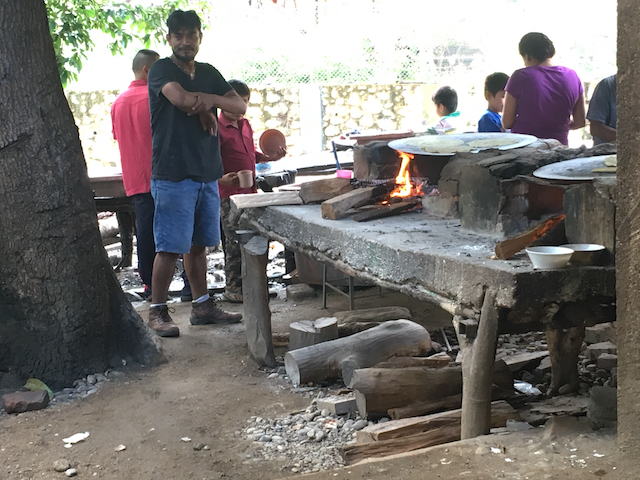
October 14th, 2017On the way back to Oaxaca City, driving the coast road to Highway 175 (the “new road”) we took the time to drive up to Pluma Hidalgo Finca in 2 feet of mud where David had worked for a year. Workers from outside fulfilled their “tequio” hours by working in the finca. Photos are of the kitchen where we shared breakfast.


Earthquake Aftermath in Oaxaca
October 6th, 2017Last weekend I caravanned with another car and a truck 7 hours to the Isthmus (to a tiny village near Santa Maria del Mar) on the Pacific Coast of Oaxaca State where 80% of the homes were down or condemned. I went with David, his friend “Cholo” and a female friend to deliver tarps I had purchased, food from the acopios (collection points) and medicine from Mexico City to a little village.

It was a pretty intense 2 days trying to coordinate with with everyone and the locals so everybody got fair amounts. We went to Juchitan to pick up stuff delivered by someone else. And then Santa Cruz to a Doctor’s house in the evening where we were given pozole and about 25 people had an “assembly.”
Then we visited a “homeless camp” and outdoor kitchen in Tuantepec…60 families with 160 kids. There were 6 homeless teachers who were teaching the kids. On the way out a man came up to me and asked “are you coming back?” Nearly broke my heart!
The first night we stayed in a teacher’s house in Tuantepec who gave Juana and me their bedroom while they slept on the floor! The next morning we went back to the Doctora’s house to sort food because the people in the acopios had just indiscriminately bagged big bags of food…sweets for the kids, big bags of rice etc. was divided. Tuna taken out and redistributed. And then everything re-bagged.
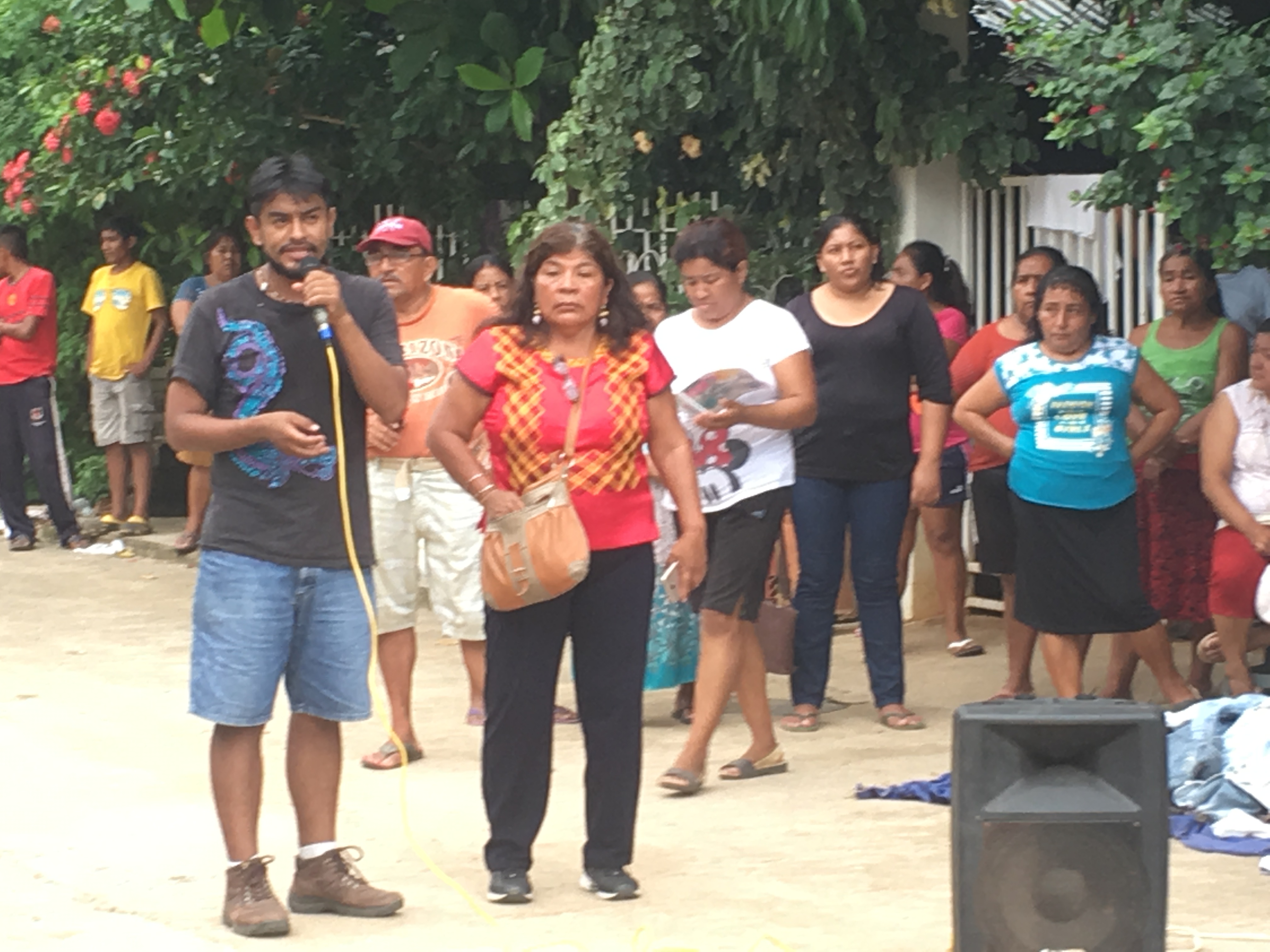
At the tiny village of Santa Maria Huamelula, people were gathered in the center and the head of the village announced our arrival with a microphone. The Dra and David spoke. 2 Navy trucks were there with several Navy guys standing around watching us. The “face” of the gov’t. No idea what else they were doing there.
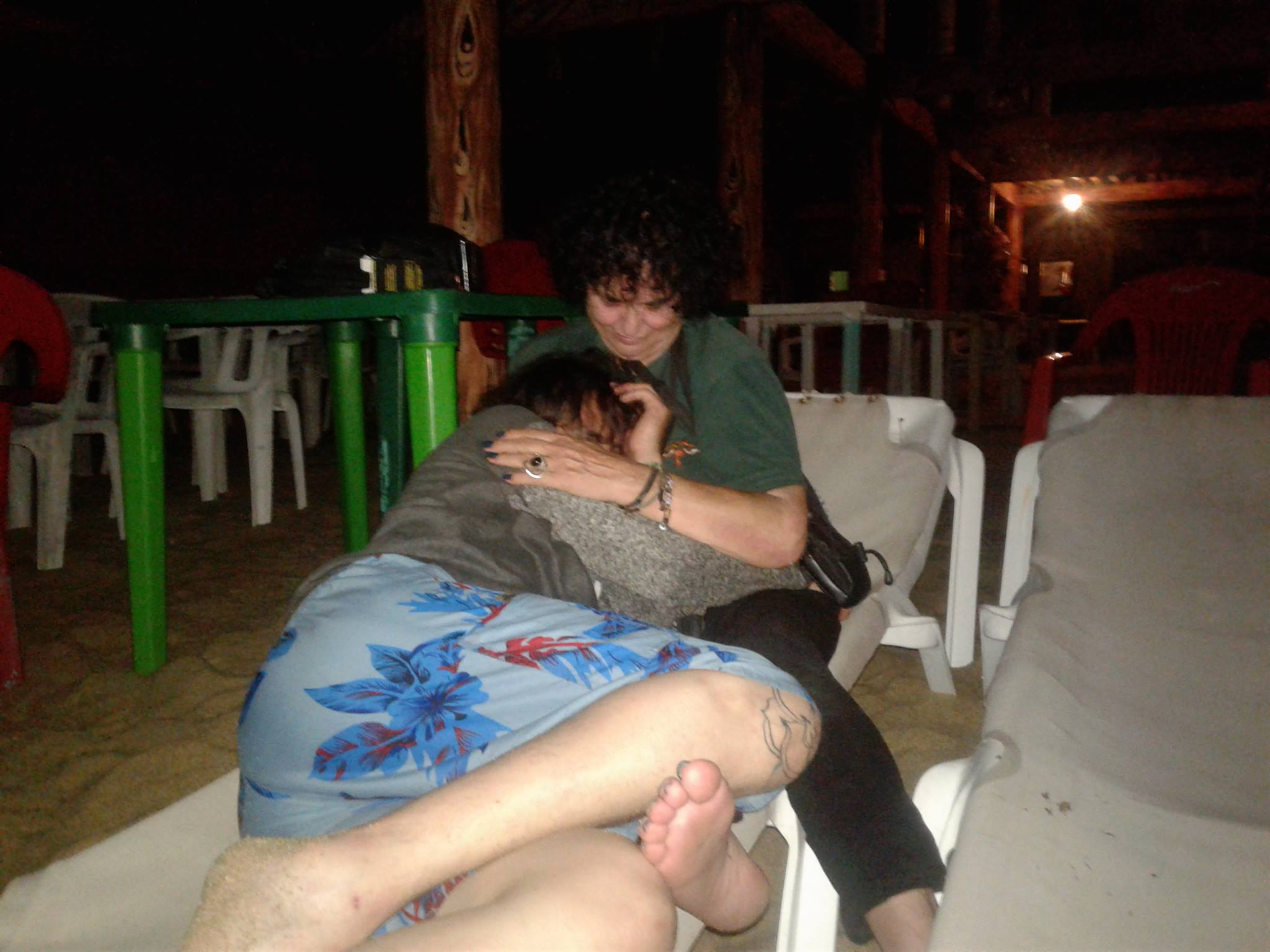
So before coming back we spent the 2nd night on the beach and partied with some mescal we picked up along the way. Cholo was one of the guys who went with us. David, a 2006 Oaxaca activist, is mentoring his friend. Cholo was quite attentive to me because he knew I was tired from intense driving. After swimming and drinking mescal, he gave me a really long foot massage with hot water (best one I’ve ever had) and then climbed into my lap and snuggled. I told him I was looking for someone just like him only my age! Everybody laughed. He’s about 20. 😉
David said he had never really had a mom. He was really sweet in spite of looking and acting like a bad boy. So I think what he was wanting at that moment was a mommie. 😉
I sent the photo to the kids and Bob with the caption “Cholo my new boyfriend.”
Doug’s response was: Are you serious?
Greg’s response:
Oh. .
Well.. .. good
Of course I explained the photo after I heard from them. Haven’t heard from Josh or Bob yet and it’s been 5 days since I sent the photo! hahaha!
It was quite an adventure. At least I found out what my car, Nissan Xterra, is capable of. Part of the way ruts in the mud 2 feet deep and landslides on the 175 highway coming back. So much for the “new” highway!
Tarps

David

Cholo and me
David and the Doctora
David Venegas
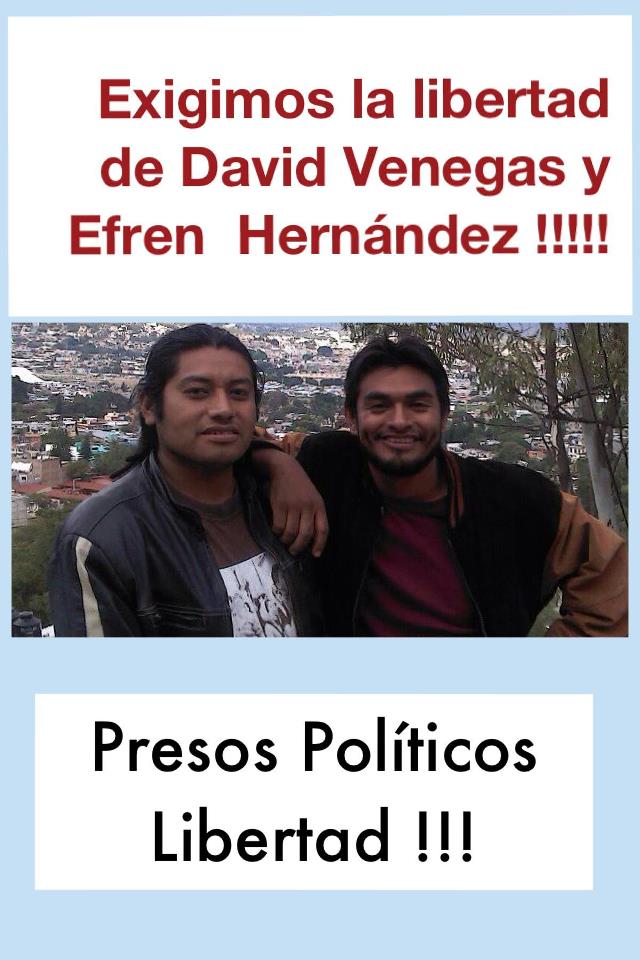
September 5th, 2017David (dubbed El Alebrijey his companeros) is an agronomist and activist with the continuing “Movement” against corruption in Oaxaca that began again in 2006 with an uprising and the striking of 70,000 teachers. He is a charismatic natural born leader.
In the wake of a massive police attack in November 2006, the government began to carry out selective repression, arresting particularly vocal visible activists and attempting to discredit them through criminal rather than movement related charges.
In 2006, Radios had been important in organizing and Radio Planton, which belonged to the teachers, was lost during the violent police attack on the Zocalo on June 14. The Radio Universidad, property of university students, was destroyed when infiltrators poured acid on the control deck. On August 21 when police attacked and destroyed the occupied state television and radio the people reacted by seizing 12 commercial radio stations.
Blockades were born and organized to defend these take-overs and protect the people inside. 2006 David organized the Blockade at the Brenemiel crossing on Highway 190 in Santa Rosa (just one of many blockades in neighborhoods across the state.)
His uncompromising commitment to refuse to participate in processes that legitimate state power put him in conflict with more moderate or opportunist sectors of the Movement and led to the creation of Oaxacan Voices Constructing Liberty and Autonomy (VOCAL).
What members of VOCAL have in common is the idea of autonomy as a founding principle. “We defend the diverse ways or organizing life. We believe in autonomy as a political proposal for community as well as personal life. Unlike other hegemonic ideologies, we don’t believe that to promote our own line of thought it’s necessary to exclude anyone else’s.”
“What made the barricades interesting,” David said, was that people all came together in defense rather than around one way of thinking or an ideological platform.” “The barricades changed the social fabric,” he said. So “at the barricades new networks, new friendships and new relationships of trust in our own communities were formed.”
On April 13 2007 David was identified, thrown violently in the back of a police truck with no arrest warrant or explanation. He spent 11 months in Ixcotel Prison. And later another four months.


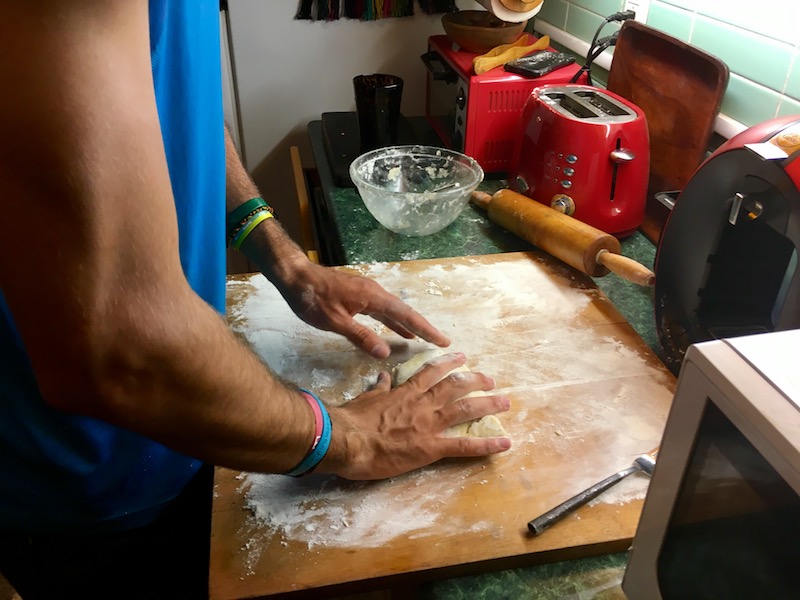
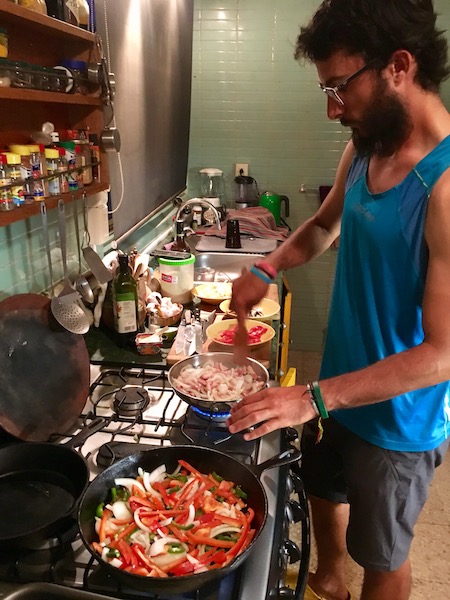
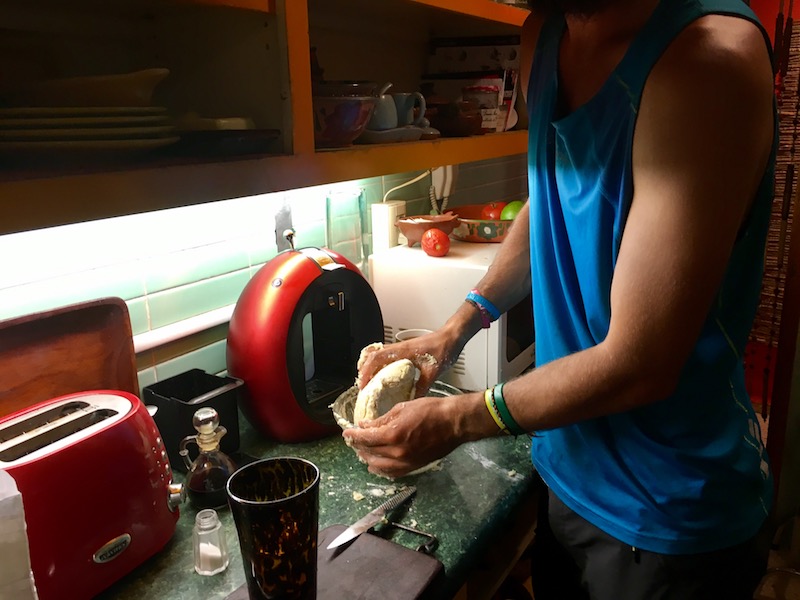
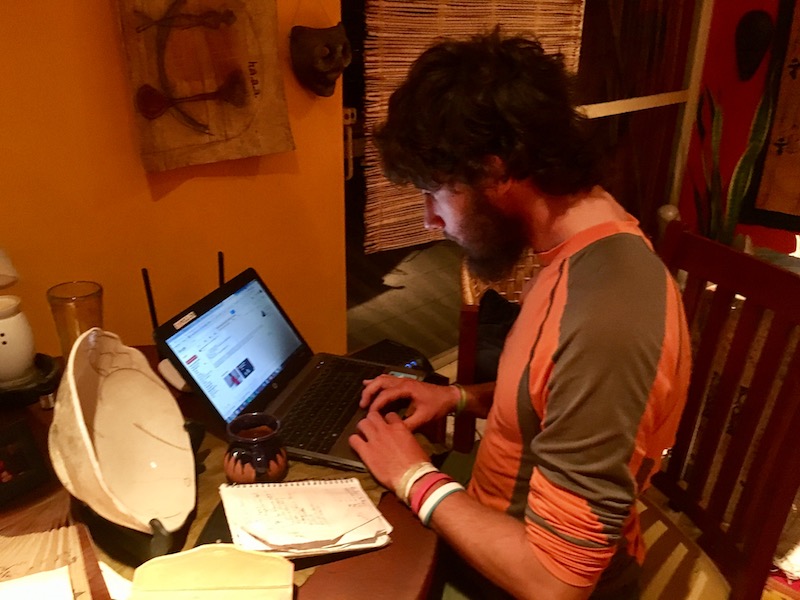
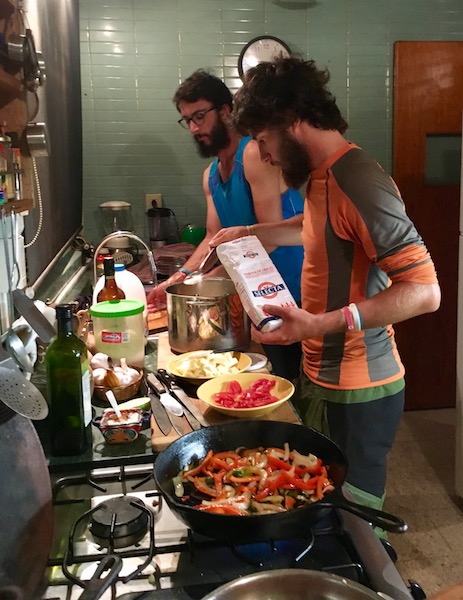
My French Bicyclers!
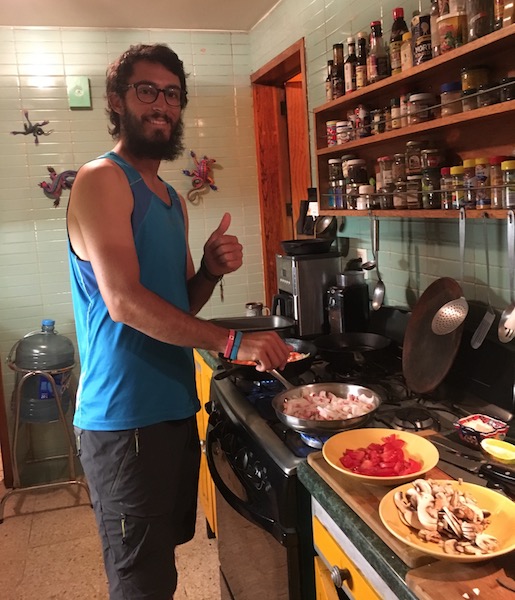
September 1st, 2017Two French brothers are cycling from Québec (Canada) to Ushuaia (Argentina): 22,000 kms or 14,000 miles. They are dedicating this trip to a French charity called Mécénat Chirurgie Cardiaque for children with heart defects. I told them to tell their parents that if they were as nice as their children then they must be pretty darn nice!
My Serbian
September 1st, 2017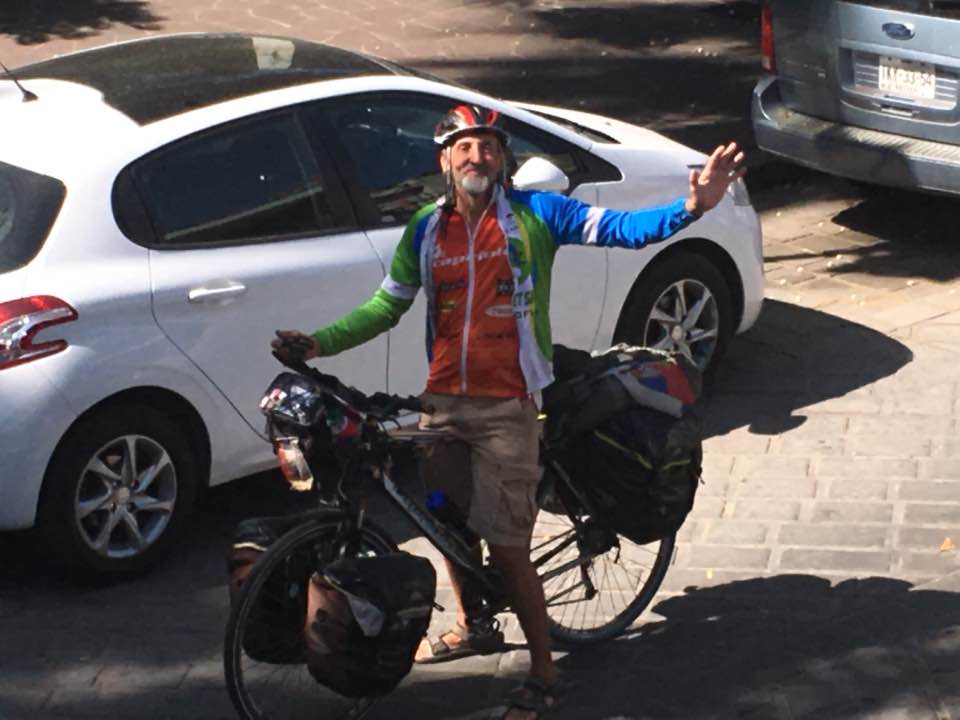
Zoran Zizak found me through the bicycling hospitality web site and stayed with me a few nights. He had an outrageous good time following me all over Oaxaca.
Doug, Josh, Polly, Greg Visit Me In Oaxaca!
August 24th, 2017

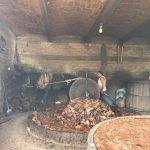

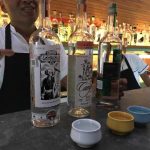





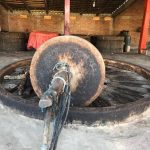


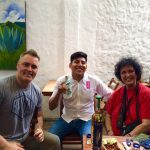
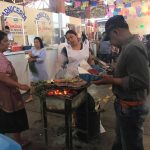



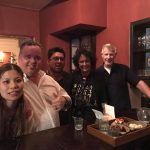
I’m in Oaxaca for 11 years and all three kids decide to come visit me at once!
Doug arrived August 29th but of course he didn’t tell the others! When they heard he was coming then they all decided to come…overlapping a bit! Doug missed Josh who arrived on the 14th and left on the 23rd but was here when Greg arrived on the 26th for 4 days.
Oh my gosh! Two cooking classes for Josh and a full day Mescal Tour. And shopping, walking, shopping, walking! Tasting menus at two restaurants, El Destilado and Pitiona and a third meal at Origen! And that doesn’t count the Tlacalula Market, Benito Juarez and November 20 Markets!
Was I A Hippie?
August 23rd, 2017Someone posted on a Couchsurfing 50+ discussion site this question:
Were You A Hippie? It got me to thinking. Long and deep.
Educated in a Catholic college prep school, my first doubts about the oppressive aspects of both religion and popular culture were given expression by reading, in high school as a teenager, Catcher In The Rye by J.D. Salinger. And “Siddhartha”-Hermann Hesse (1922) and “Razor’s Edge”-Somerset Maugham.
In my view, all hippies were counterculture but often for various reasons. Much of it was not ideological but was just adolescent rebellion against authority. So young people grew their hair long and dressed sloppy and purposely often dirty and freely engaged in sex.
The worldview of hippies and political activists alike included a make the world better mindset based on a combination of Eastern philosophy and secular Humanism. For some this meant nebulous peace and antiwar and all-you-need-is-love. For others this meant an active attempt to do something practical. They didn’t think the Hippies had a program.
I did some browsing on the internet and found this on Wikipedia.
European Roots Of The Counter-Culture Movement
Between 1896 and 1908, a German youth movement arose as a countercultural reaction to the organized social and cultural clubs that centered around German folk music. Known as Der Wandervogel (“migratory bird”), the hippie movement opposed the formality of traditional German clubs, instead emphasizing amateur music and singing, creative dress, and communal outings involving hiking and camping.[16] Inspired by the works of Friedrich Nietzsche, Goethe, Hermann Hesse, and Eduard Baltzer, Wandervogel attracted thousands of young Germans who rejected the rapid trend toward urbanization and yearned for the pagan, back-to-nature spiritual life of their ancestors.[17] During the first several decades of the 20th century, Germans settled around the United States, bringing the values of the Wandervogel with them. Some opened the first health food stores, and many moved to southern California where they could practice an alternative lifestyle in a warm climate.
About the same time Henry David Thoreau, a Transcendentalist, wrote “Walden,” a reflection upon simple living in natural surroundings, and his essay “Civil Disobedience,” originally published as “Resistance to Civil Government,” in the mid 19th Century was an argument for disobedience to an unjust state.
Over time, young Americans adopted the beliefs and practices of the new immigrants. One group, called the “Nature Boys,” took to the California desert and raised organic food, espousing a back-to-nature lifestyle like the Wandervogel.[18] Songwriter Eden Ahbez wrote a hit song called Nature Boy inspired by Robert Bootzin (Gypsy Boots), who helped popularize health-consciousness, yoga, and organic food in the United States.”
Wiki
The song has been recorded by David Bowie and others and was part of the Moulin Rouge movie soundtrack.
Historical Roots in the U.S.
“Birth of the Cool”
The World Wars and Great Depression spawned a ‘beat generation’ refusing to conform to mainstream American values which lead to the emergence of the Hippies and the counterculture.
The “Beat” writers had picked up the lingo of Black musicians in the 40’s who were using the terms “hip” and “hep” and “hep cat.” This was the birth of “cool” and they were called “Beatniks.”
In 1962-64 in college we were having beat parties where we wore black turtleneck sweaters and leotards, drank cheap red wine and listened to Miles Davis and beat poetry like “Howl” by Allen Ginsberg (written in 1955 BTW) with candles burning in old wine bottles. And reading Kerouac and Alan Watts.
So the proliferation of the counterculture movement actually started in the late 50’s way before you saw any “hippies.” Right after the end of WWII the GI bill enabled returning men to get an education and become successful businessmen and their wives could enjoy leisure time with newly acquired wash machines and nice kitchens. The social environment was excessively restrictive after the chaos of the war when adults wanted predictability and order. The middle class rose like a sphynx. Families were headed by “The Man In The Grey Flannel Suit,” a play of the same name, and dutiful wives played highly defined roles. To not be thought weird, dresses on women had to hit at exactly the right spot on the calf.
But their children rebelled against absentee fathers working long hours and restrictive roles for women and moral rules. They left home for freedom and the sexual revolution. The Beatles sang “She’s Leaving Home.”
Women began rebelling too. The Feminist Movement grew and women started meeting in “Consciousness Raising” groups. Women started wearing “granny” dresses and Mini skirts. The hell with that “right” spot on the calf. Guys grew their hair long in defiance of societal expectations of the male.
Psychedelics
In 1964, Timothy Leary, a Harvard University professor who was studying psychedelics went to Mexico and tried mushrooms. He came back and told everyone to “tune in, turn on, and drop out.” The Beatles went to Oaxaca, Mexico and popularized magic mushrooms. First thing my couchsurfers want to do is go to Hautla and try mushrooms!
Taking LSD and other psychedelics consisted of various stages of ego-release and an often startling alteration of perceptions. “I experienced oneness with the universe” was often reported. A few people jumped out of buildings thinking they could fly. What it did though, was to make users realize their ordinary perceptions were limited and that anything was possible. However, I never took psychedelics figuring with my luck I’d have a “bad trip.” But psychedelics led many to meditation.
Meditation and Unity Consciousness
…all matter is energy condensed to a slow vibration, that we are all one consciousness experiencing itself subjectively…” Bill Hicks, Comedian
All these ideas became blended with ideas from eastern religion and science like (“String Theory” which asks where is the seat of consciousness)articulated in a western vernacular by Jack Kerouac-“On The Road” and Alan Watts “The Dao Of Physics” and meditation enthusiasts like Ram Dass (formerly Harvard professor Richard Alpert) whose first book was “Be Here Now” and the proliferation of the New Age movement. Everybody read Maslow’s “Hierarchy of Needs.” You saw posters Make Love Not War and rEVOLVEution.
I read Thomas Merton, the Trappist monk who died while in Thailand at an ecumenical meeting of East/West religions including the Dali Lama. Merton bridged my childhood Catholicism from organized religion to eastern practices and Transcendental Meditation as taught by the Maharishi Mahesh Yogi.
Marishi, who was trained as a physicist, separated the Indian Vedic religion out and just taught a simple stress relieving and natural, effortless technique, with the use of a “mantra” or sound.
Others like my best friend and old roommate. moved with her husband and kids all over the country following an Indian guru.
So the “hippies” generally were/are interested in personal growth and expansion of consciousness as the New Age movement produced “gurus” books and workshops. But Ram Dass told us the Guru is within. I took every course and workshop there was available from an Encounter Group to Democratic Parenting. I had friends who followed Yogi Bhajan and opened an ashram where we would meet and do kundalini yoga although my main choice of meditation was Transcendental Meditation…the choice for householders who could meditate without scaring the bejesus out of their kids.
Cross Pollinisation of Ideas
It was the political activists and university students that did all the work for political change, while, what I call the lifestyle hippies, were having a sexual revolution in San Francisco. Others banded together to form communes in northern California and Oregon. By 1968, by appearance, you couldn’t visually tell the difference between the various groups. Not all of them were long-haired. Mario Savio looked like he was still out of the 50’s. But there was a cross-over and blending of ideas and they influenced each other.
At the same time, there were fierce differences of opinion as they accused each other of elitism and argued about who was selling out to The Man (government authority led by the nose by the oligarchs) and who wasn’t. What should we be doing? And how to put their world view of collaboration and cooperation and equality into practice. (Praxis) Many ended up splitting off from communal groups to become more activist. Conformity within and between groups was largely limited to freedom of lifestyle and dress.
These ideas resonated with people who had read books that had inched revolutionary and utopian thinking along. “Siddhartha”-Hermann Hesse 1922, “Razor’s Edge”-Somerset Maugham, Camus and the Existentialists. Allen Ginsberg, William S. Burroughs, and Jack Kerouac-“On The Road.” Huxley “Doors Of Perception.” George Orwell “1984” and “Animal Farm”, all the outsiders, iconoclasts and the Beats. “The True Believer” Eric Hoffer, was prophetic having been written in the early 50’s. “Rules For Radicals” by Saul Alinsky didn’t come along until the early 70’s.
Liberation Theology
In the mid 60’s my Jesuit theology professors had introduced their students to Liberation Theology. Praxis, the synergy between theory and practice, knowledge and relevance, ideas, images, and the real appealed to those who were looking to find meaning by putting their belief in love into practice. Although liberation theology has grown into an international and interdenominational movement, it began as a movement within the Catholic Church in Latin America in the 1950s–1960s. It was an attempt to return to the gospel of the early church where Christianity is politically and culturally decentralized. Liberation theology arose principally as a moral reaction to the poverty seen as having been caused by social injustice.
The term was coined in 1971 by the Peruvian priest Gustavo Gutiérrez, in his book “A Theology of Liberation.” Gutierrez emphasized practice (or, more technically, “praxis”) over doctrine. According to Gutiérrez true “liberation” has three main dimensions: First, it involves political and social liberation, the elimination of the immediate causes of poverty and injustice. Second, liberation involves the emancipation of the poor, the marginalised, the downtrodden and the oppressed from all “those things that limit their capacity to develop themselves freely and in dignity.” Third, liberation theology involves liberation from selfishness and sin, a re-establishment of a relationship with God and with other people. Gutierrez clarified his position by advocating a circular relationship between orthodoxy and orthopraxis seeing the two as having a symbiotic relationship. Black Liberation Theology and Feminist Liberation Theology piggybacked on this as well.
But Liberation Theology was dealt a blow when Archbishop Romero was assassinated in El Salvador in 1980. A close friend, a nun, was working in a refugee camp just across the border during Reagan’s Central American proxy wars against Communism. It was with some satisfaction when I read he was declared a martyr by Pope Francis on 3 February 2015, paving the way for his beatification, which took place on 23 May 2015.
Education
In the field of education, going back to the late 19th Century, American Philosopher John Dewey’s ideas of democracy, social reform and related pedagogy had been the accepted philosophy of education. He believed the purpose of education should not revolve around the acquisition of a pre-determined set of skills, but rather the realization of one’s full potential and the ability to use those skills for the greater good. He notes that “to prepare him for the future life means to give him command of himself; it means so to train him that he will have the full and ready use of all his capacities.” (My pedagogic creed, Dewey, 1897).
But education meant for democratization and an enlightened citizenry, became teacher oriented and largely a matter of classroom management. And it’s worse today than ever.
Paolo Freire published “Pedagogy of the Oppressed” in 1970. He proposed a pedagogy with a new relationship between teacher, student, and society. The book is considered one of the foundational texts of critical pedagogy. Dedicated to what is called “the oppressed” and based on his own experience helping Brazilian adults to read and write, Freire includes a detailed Marxist class analysis in his exploration of the relationship between what he calls “the colonizer” and “the colonized.” In the book Freire calls traditional pedagogy the “banking model” because it treats the student as an empty vessel to be filled with knowledge, like a piggy bank. However, he argues for pedagogy to treat the learner as a co-creator of knowledge.
Ivan Illych published his seminal work in 1971, “Deschooling Society” further breaking with Dewey and Freire, believing that ideas for de-institutionalizing education may be a starting point for a de-institutionalized society.
The contemporary Oaxacan, Gustavo Estevez, would later became a compatriot of Illych and expand his ideas of education to include the analysis of colonialist do-goodism and the empowerment of the disempowered. Several years ago, Gustavo took about 30 U.S. students to 4 countries to study local sustainable methods…Thailand, New Zealand, India and lastly Oaxaca. Gustavo’s trajectory…from the grandson of a Zapotec grandmother, to Harvard, to Coca Cola, to a high policy position in the Mexican government and back to his grandmother to observe Zapotec farming and their sustainable methods was a long strange trip. The Zapotecs knew what they were doing…better than any US Aid agency. I hosted several of these students while they were in Oaxaca…I listened for hours while one debriefed her near breakdown on the program because it turned her American patronizing do-gooder world view upside down.
On The Road
Political activists and hippies alike went On The Road, inspired by Karouac, which influenced their attitudes about social culture. When I was hitchhiking Europe in 1965 scores of them were heading on the Hippie Trail from Europe to India and Katmandu who wanted to “be here now” or taste eastern religion first hand. Or just cavort, soaking up foreign cultures.
Ken Kesey who grew up in Springfield, Oregon and his “Merry Pranksters” painted a VW Bus in psychedelic colors and went on the road across America which was documented in Tom Wolfe’s “The Electric Kool-Aid Acid Test.” Other writers like D.H. Lawrence went to Mexico including Oaxaca.
It doesn’t take much money to travel if you are young, hardy, hitchhike and willing to sleep outdoors and dumpster dive for food. They did it the same way they do it now. Work and earn a little money and take off. I have an Indian friend who gave a TED talk called “The Colorful Hitchhiker.” For the Americans that meant just getting enough money for the plane ticket.
When I was visiting the Miao minority group in the mountains in southern China I thought I was the only foreigner there until I came upon a young nicely dressed French couple. They had been traveling for 2 years by walking up to houses in the countryside and gesturing for food and a place to sleep in exchange for money. And getting to know other cultures.
Hawaii has had a tradition of hippies back-to-the-earth culture that I’ve thought was harmonic with Aloha that calls people there. Years ago when my son was living on Kauai my husband and I hiked the Napoli Trail. Hanging onto grass and weeds for 10 miles to keep from slipping 2000 feet into the ocean, I thanked the spirits we made it out alive! That was enough for me! 🙂 We never made it to the Hippie Beach at the end of the trail.
Zipolite, a nudist beach on the Oaxaca Pacific coast is another draw for old and new hippies alike. Many of my Couchsurfers come up to Oaxaca City from Zipolite and the yoga communities in Muzunte.
Music
By this time the social elements…long hair and scraggly dress, indicating a refusal to be co-opted by big business and consumerism, were common to hippies and political activists alike. Song lyrics reflected the political and social milieu. Pete Seeger was a folk singer of protest music in support of international disarmament, civil rights, counterculture, and environmental causes. His best-known songs include “Where Have All the Flowers Gone?” “If I Had a Hammer and “Turn! Turn! Turn!” (lyrics adapted from Ecclesiastes), which have been recorded by many artists both in and outside the folk revival movement and are sung throughout the world. “Flowers” was a hit recording for the Kingston Trio (1962); Marlene Dietrich, who recorded it in English, German and French (1962); and Johnny Rivers (1965). “If I Had a Hammer” was a hit for Peter, Paul and Mary (1962) and Trini Lopez (1963) while the Byrds had a number one hit with “Turn! Turn! Turn!” in 1965.
Seeger was one of the folk singers responsible for popularizing the spiritual “We Shall Overcome” (also recorded by Joan Baez and many other singer-activists) that became the acknowledged anthem of the Civil Rights Movement, Rock concerts like Woodstock flourished. Having been rejected by society at large and yearning for connection, young people found solace and community with others of the same world view. Bobby Dylan wrote The Times Are Changin: and political lyrics like:
With God On Our Side
Oh my name it ain’t nothin’
My age it means less
The country I come from
Is called the Midwest
I was taught and brought up there
The laws to abide
And that land that I live in
Has God on its side
Oh, the history books tell it
They tell it so well
The cavalries charged
The Indians fell
The cavalries charged
The Indians died
Oh, the country was young
With God on its side
The Spanish-American
War had its day
And the Civil War, too
Was soon laid away
And the names of the heroes
I was made to memorize
With guns in their hands
And God on their side
The First World War, boys
It came and it went
The reason for fighting
I never did get
But I learned to accept it
Accept it with pride
For you don’t count the dead
When God’s on your side
The Second World War
Came to an end
We forgave the Germans
And then we were friends
Though they murdered six million
In the ovens they fried
The Germans now, too
Have God on their side
I’ve learned to hate the Russians
All through my whole life
If another war comes
It’s them we must fight
To hate them and fear them
To run and to hide
And accept it all bravely
With God on my side
But now we got weapons
Of chemical dust
If fire them, we’re forced to
Then fire, them we must
One push of the button
And a shot the world wide
And you never ask questions
When God’s on your side
Through many a dark hour
I’ve been thinkin’ about this
That Jesus Christ was
Betrayed by a kiss
But I can’t think for you
You’ll have to decide
Whether Judas Iscariot
Had God on his side
So now as I’m leavin’
I’m weary as Hell
The confusion I’m feelin’
Ain’t no tongue can tell
The words fill my head
And fall to the floor
That if God’s on our side
He’ll stop the next war
The Viet Nam War and Political Action
The activists wanted to create change on an ideological public/political level. They rode the freedom trail in the south until The Civil Rights Act was passed in 1964 under Johnson. The Black Panthers set up soup kitchens in LA for their forgotten community members. Then the anti VietNam War or Peace Movement burned up the country precipitated by the compulsery draft.
The political revolution on campuses were ramping up. Students were trying to shut down campuses like Columbia and Berkeley that were restricting speech against the Viet Nam War. Riots at the 1968 Democratic Convention ended with the jailing of protesters. There was the rise of the Panthers, the Brown Power movement, the opposition to the Viet Nam War, the feminist movement and the rise of the New Left which still thought they could work through the system. People became split apart.
In 1968 Martin Luther King was shot and killed in Wash D.C. Many people are not aware of this because the mainstream media didn’t cover it, but the family of MLK won a civil suit accusing the FBI of having him assassinated. Robert Kennedy was shot and killed in LA in 1968 at a time when we were living there. I still remember watching it on TV like it was yesterday. It elicited memories of his brother, JFK being killed with all the subsequent conspiracy theories. Then four students were shot by Ohio National Guardsmen in the 1970 Kent State Massacre.
The Peace movement was largely non-violent but the FBI was infiltrating and instigating violence within and between groups too. Ramsey Clark, retired Attorney General under President Johnson, has admitted that the FBI was dumping drugs into Black communities to disrupt the Black Power movement. Controversy was rampant.
Between and among these people a fierce debate and accusations raged. What should we be doing? Who was selling out? How do we do what we are doing without selling out? Students for Democratic Society (SDS) – founded in 1960 and was seen as one of the most active college campus groups of the New Left and the antiwar movement. Conformity within and between groups was largely limited to lifestyle and dress.
Many in the peace movement within the U.S. were students, mothers, or anti-establishment hippies. Opposition grew with participation by the African-American civil rights, women’s liberation, and Chicano movements, and sectors of organized labor. Additional involvement came from many other groups, including educators, clergy, academics, journalists, lawyers, physicians (such as Benjamin Spock), and military veterans. Their actions consisted mainly of peaceful, nonviolent events; few events were deliberately provocative and violent. In some cases, police used violent tactics against peaceful demonstrators. By 1967, according to Gallup Polls, an increasing majority of Americans considered US military involvement in Vietnam to be a mistake, echoed decades later by the then head of American war planning, former U.S. Secretary of Defense Robert McNamara.
What was common among all these groups was the world view that the country was fucked and the Viet Nam War needed to be stopped. The hippies did it on a personal level by attempting to start with their own lives. All politics are local they said. The Anti Vietnam war organizers in LA in the 60’s wore long skirts and had bare feet as I and many young women did.
The Drug War
The FBI and CIA was importing drugs into the Black communities to destabilize them and they thought, in their paranoia, to head off a Black Revolution.
They did this to the antiwar movement too. Journalist Dan Baum wrote in the April cover story of Harper’s about how he interviewed Ehrlichman in 1994 while working on a book about drug prohibition. John Ehrlichman, who served 18 months in prison for his central role in the Watergate scandal, was Nixon’s chief domestic advisor when the president announced the “war on drugs” in 1971. The administration cited a high death toll and the negative social impacts of drugs to justify expanding federal drug control agencies. Doing so set the scene for decades of socially and economically disastrous policies.
Ehrlichman provided some shockingly honest insight into the motives behind the drug war:
“The Nixon campaign in 1968, and the Nixon White House after that, had two enemies: the antiwar left and black people. You understand what I’m saying? We knew we couldn’t make it illegal to be either against the war or black, but by getting the public to associate the hippies with marijuana and blacks with heroin, and then criminalizing both heavily, we could disrupt those communities. We could arrest their leaders, raid their homes, break up their meetings, and vilify them night after night on the evening news. Did we know we were lying about the drugs? Of course we did.”
Baum’s article is called “Legalize it!”
Then the 1979 Sandinista revolution that overthrew Anastasio Somoza, one of our favorite Latin Dictators, was not looked upon fondly by Reagon and his friends. He called the counter revolutionary Contras “freedom fighters,” and compared them to America’s founding fathers. In his attempt to get Congress to approve aid for the Contras, Reagan accused the Sandinista government of drug trafficking. After his administration tried to mine the Nicaraguan harbors and got a hand-slap from Congress, it turned to secretly selling missiles to Iran and using the payments–along with profits from running drugs–to keep right on funding the Contras. 50,000 lost lives later, the World Court would order the U.S. to “cease and to refrain” from unlawful use of force against Nicaragua and pay reparations. (We refused to comply.) The fact is, with most of the cocaine that flooded the country in the Eighties, almost every major drug network was using the Contras operations in some fashion.
I had a friend who was a nun who worked in the Honduras side of the border in a refugee center helping those who had fled. I have to laugh and, in the immortal words of Nancy Reagan, “just say no” to drugs. The hypocrisy of the double standard is ludicrous. All you can do is laugh, or cry. I guess it’s okay to deal drugs if it’s for the cause of war.
The New Left
The Peace And Freedom Party around the time of the 1968 elections in LA was active. Old Leftists (Marxists) would crash their meetings and even started fist fights. Our next door neighbor was elected to go to their convention in Michigan to nominate Eldridge Cleaver, who was Black and wrote “Soul On Ice”to run for president on the Peace and Freedom party ticket.
The New Left couldn’t work together with the black and Brown movements because the Blacks and Browns regarded the leftists as primarily middle class intellectual elitists who didn’t understand their problems. They didn’t quite get that the New Left was fighting for economic equality for them as well just as is happening now. They wanted to speak for themselves. Blacks and Browns couldn’t work together either so the Browns had their own Brown Power Movement. The New Left didn’t appeal to the working class or the Unions either. I’ve always thought this was tragic as far as the social and political “revolution” went. We are seeing the results of this failure today where the vacuum is being filled and the white under-employed working class is being pitted against minorities and others.
“Wall Street Occupy Movement”
The bottom line is the emphasis on personal evolution, relationships and cooperation over Wall Street hedge funds that don’t contribute to wealth, the lobbyists like Citizens United and the military industrial war machine. If we are going to survive as a species this is the way we will do it in the end anyway.
The “Wall Street Occupy Movement” conducted workshops, interviewed people to inform and urged people to go home and work “from the bottom up.” They are still out there whether they wear the dress or not. They are still resisting the oligarchy that has co-opted the government and turned it into a military industrial complex that Republican President Eisenhower warned us against. So The movement predictably threatened the powers that be and Homeland Security ordered cities to crack down on demonstrators which they brutally did. Winter eventually defeated the campers.
Divided We Fall
George Carlin said it best:
Volunteerism And Community Building
All Politics is local. There was community building by volunteering. A group of women formed a group under the auspices of the YWCA called “Women Committed To Action.” The first activity we took on was penal reform. The first thing we did was get the warden fired in the women’s prison We transported women to the YWCA in Y vans for physical exercise on Sundays.
The Newgate Program was a 4 year college degree program for lifers. (many of the sentences would be commuted.) We met with the prison superintendent to get permission to escort women to the men’s prison to attend these classes and then escort them back. So I would wait in the prison library. I scared most of the inmates (I was only about 25) but one sat down with me and talked. It was mandatory for any lifer in the program to attend a Therapy Group led by a psychiatrist. He got permission for me to attend these therapy groups…ostensibly as a community backboard. It was his idea.
Recidivism in the prisons was 80+% in those days which meant they were just coming back out to reoffend. A lot of adjustments prisons made in those days have been reversed.But among the many other things we did, was to form a support group of wives of male inmates who often served a “sentence” along with their husband. No one wanted to be associated with them. In their isolation they often became abusive to their children. So we talked some counselors into donating time for a Parent’s Anonymous group and taught them how to form a babysitting co-op. Unfortunately after a few years we had to abandon the support group because their spouses had them watched…they could only go certain places and do certain things or an inmate’s “friend” would beat them. Control over the spouse was the only control they had left.
With the Oregon State Legal Aid office we took 13 reform bills through the legislature. One of the pieces of legislation that passed the legislature unanimously was the Conjugal Visit bill…to try to keep families together until release. After a few years, with a change in prison administration they let a serial killer out on this program that we are certain was intentional. He offended again and that was the end of that program.
A well-known lifer had a spiritual conversion of sorts while he was in the “hole” and was eventually pardoned by the Governor of Oregon (McCall) at the time after which he wrote an autobiology. He was later appointed prison ombudsman and then head of the Dept of Community Services. He married the Black subsequent prison ombudsman who is now and has been a Senator for many years. Anyway he worked on establishing some work programs for released inmates as they were generally unemployable.
This was only one of many other volunteer activities I participated in in the 70’s and I am really grateful for those opportunities which were growing experiences for me also served as examples for my growing 3 sons. I was a volunteer coordinator for the American Field Service, a high school student exchange program and hosted several students myself to expose my kids to other cultures. There were many people in those days who worked on similar projects. And many of them still are whether wearing the “dress” or not. One of my friends spearheaded and shepherded the first “Bottle Bill” in the country to recycle pop and beer bottles, through the legislature.
Self Sufficiency and Cooperation
By the 70’s, for the folks with families at home, the Whole Earth Catalogue by Stewart Brand was the bible. The focus was on self-sufficiency, ecology, alternative education, “do it yourself” (DIY) and wholism, and featured the slogan “access to tools.” And we were all reading Buckminster Fuller. Earth Day drew thousands in local communities. My friends and I formed a food co-op where we ordered in bulk from a distributor and split the food up among us. We gleaned fruit and vegetables that were left in the fields after harvest. I canned hundreds of jars.
I was an “earth mother.” We formed babysitting co-ops. And car pools to take kids to activities. And using Laurel’s Kitchen cookbook which told us that serving and cooking food for loved ones was a holy thing. And going to New Age retreats. And learning to meditate.
The feminist movement was accelerating. Many of my friends joined “Consciousness Raising” groups. After a few times going to one I dropped out. Even though, of course, I espouse equality of opportunity. I didn’t like the tone. I didn’t want to be an enemy of men. I wanted to be friends with them.
When we moved into our first house in a small conservative town in Oregon I was definitely considered “strange” and an “outsider.” by the neighbors. I still consider myself an outsider. I painted in purple across the laundry room wall FUCK HOUSEWORK. My motto was “just dirty enough to be happy and clean enough to be healthy.” I let my 3 kids get dirty because I figured that way they would develop more immunity.
I take solace in what this hippie says about “Weirdness.”
I never told anyone what my husband did for a living for years and it wasn’t pc at the time for anyone to ask. I wore old holey t-shirts and jeans because I didn’t want anyone to put me in the “medical wife” box. When my oldest started school he begged me not to wear long skirts and put on some shoes.
Even today I mostly wear t-shirts. It takes more than long skirts, sex, drugs and rock and roll to be a “hippie.” But yes, in LA weed was only $20 for a “lid” the way they measured it referring to a big coffee can lid.
It’s the counterculture cooperative humanist values that make a hippie. They “dropped out” of conventional consumerist society. Some dropped out entirely and formed communes. I am not an ideologue and don’t follow any dogma. No, hippie is not just sex, drugs and rock and roll.
Travel reveals the human heart and what we have become in this world. Look beneath the surface of things to the heart of each day.
Travel gives one perspective…forces one to leave behind one’s “baggage,” to forget the known (which is worthless while traveling). And forces one to leave behind judgment. On a deeper level, as Pico Iyer says,
my favorite travel writer:
“what really draws me to travel is the prospect of stepping out of the daylight of everything I know, stepping into the shadows of what I don’t know and may never will with people I encounter along the way. We travel, some of us, to slip through the curtain of the ordinary, and into the presence of whatever lies just outside our apprehension. I fall through the gratings of the conscious mind and into a place that observes a different kind of logic.”
Transcendence…
Young people are traveling by the thousands or more every day even now and I met many of them on the road in the 5 years I traveled after retirement and since then. And most of my couchsurfers do also. Many do it by the exchange model…offering services and work. But now, I wouldn’t be willing to dig up someone’s garden in exchange for a meal! Not with MY back! Ha!
If more Americans travelled maybe they would have a little more understanding of geopolitical issues we are grappling with today.
But it disturbs me, when I’m traveling and see grungy backpackers in other countries, when I hear people call them “hippies.” Couldn’t be anything further from the truth. I do wish these people would clean up a bit though because it’s considered disrespectful especially in some Asian cultures like Thailand that does value cleanliness. Those backpackers are not at home. Now you can even find “BegPackers!”
Later I encouraged my sons to travel…one of the most educational experiences you can have to learn there are many valid ways to live and get along with other cultures and values. Now one lives in Hong Kong and is married to a Cantonese woman, another married to a Thai and I live in Oaxaca Mexico often hosting travellers from all over the world through hospitality web sites like Couchsurfing (Travellers) TrustRoots (hitchhikers) and Warm Showers (bicycling) bringing the world to me.
So Was I A Hippie?
I find value in questioning “authority.” I try to question my thoughts. Critical thinking is a hard job. The book “Letters From Thailand” is about a Chinese man trying to integrate his family into Thailand. The principal character learns that the strongest survival instinct is self deception. After a long sorrowful road to self-discovery he is astounded to learn that what we believe about ourselves does not necessarily reflect who we really are in our actions. Hypocrisy is the devil.
Personally I see great value in humor…and laughing. You can laugh at me too and I will laugh with you. Indeed my moniker is Laughingnomad.
“Hippies” were a phenomenon at a particular time in history and the word has become pejorative and distorted and can mean anything depending on a person’s biases and perceptions. And experiences I might add. In fact I use the word counter-culture and so do my friends. And is more inclusive of alternative life-styles and ideas.
A Black friend posted this on Facebook:
“I pick up hitchhikers, I stay with people around the world I don’t know, I slept under the Brooklyn bridge 2 months ago, I put up signs in my front yard ‘free fruit and veggies’ from my garden, I speak to strangers passing by and invite them onto my porch for tea or other beverages and food, I take in stray dogs, I donate to people down and out, I’m open minded about most things. I’m a ‘giving minority’ 100% and then a hippie 100%.”
About as fair a description of the hippie culture as I’ve ever heard.
If I am “hippie at heart” that is right in-as-far as I participated in a historical period in time and continue to share in the values of empowerment, community building and resistance to political bullshit however I perceive it to be at any given moment.
I’m still hanging on to my T-shirts. Even if with a wry smile.
A Reminder: Truth To Power and Free Speech
The Free Speech Movement had been percolating since the late 50’s in opposition to campus authorities who were disallowing political activity and free speech on campuses. Especially later in the 60’s during the Viet Nam War. Finally on December 2, 1964 Mario Savio gave his famous “Rage Against The Machine” speech atop a police car in front of the steps of Sproul Hall on the Berkeley campus precipitated by a campus control issue. Our next door neighbors in LA had been there.
They won.
I am bewildered by the political polemics today. Some of my friends firmly believe the 60’s-70’s ruined the country even though it helped stop the Viet Nam War. I try to read everything from the left to the right to try to understand. Labeling and putting people into “groups” seems besides the point and so divisive. Conservative Evangelical Christians consider themselves as having absolute truth. How can this possibly provide a democratic people’s mandate to government? I wish there was a Mario Savio today who could again caution us to be aware of the responsibilities that come with the right of “free speech.”
What about the common good of the country!!! But isn’t that what we said years ago? Divide And Rule in politics and sociology is gaining and maintaining power by breaking up power structures, and especially prevents smaller power groups from linking up, causing rivalries and fomenting discord among the people.
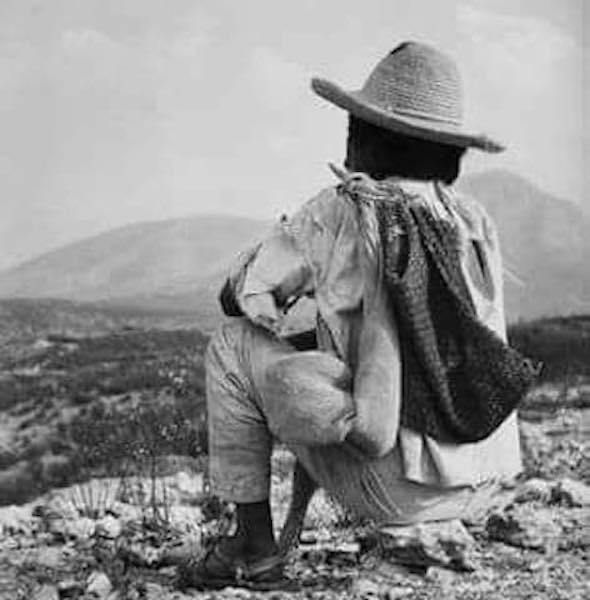
Alone, we are defenseless. Collected, we are sacred.
A Medical Practice In The U.S.
July 29th, 2017My husband, who was in a pediatric practice…which is basically a GP for little people… went to work at 8 and came home about 6…the last hour finishing up chart notes and patient call-backs…with an hour off for lunch. Four days a week. At least half the day “off” was spent making hospital “rounds.”
If there was a really sick baby, eg. a premature birth in the hospital, that doctor was on “call” 24 hours a day 7 days a week.
Then each doctor in the group practice took turns taking after hours “call.” There were 5 doctors in his group. Patients could call in at all hours and on weekends free of charge. So that meant his sleep was disturbed many times during the night. It also meant he couldn’t plan much for the weekends on “call” as he had to stay near the phone.
Finally the last couple of years he “bought” out of call by taking less prorated monthly pay. Of course all the doctors shared the cost of a huge bookkeeping and managing staff and the nurses and translators. Pediatricians are among doctors who get the least pay…the joke being that you can’t charge as much for people under 3 feet tall. 😉
If a practice accepted medicare patients (and many medical groups are refusing to do this) a doctor is paid pennies on the dollar…about 70% less.
And a medical education in the U.S. costs upward of $300 to $500 thousand dollars. My husband finally paid off all his loans the last year of practice.
The happiest day of his life was the day he retired.
My son, who is an anesthesiologist, learned from his father, to be in a solo practice…works from 7am until usually 7 at night 5 and sometimes 6 days a week. He can’t refuse medicare patients because he is working for the surgeon. I worry about him.
Finally there is the issue of doctor depression and suicides, often during residencies with 24 hours “on” every other day and a punishing hazing culture in medical schools and teaching hospitals.
https://www.fastcompany.com/3056015/the-hidden-epidemic-of-doctor-suicides
The health system in the U.S is criminal.
What Happened To The Left
July 5th, 2017http://www.salon.com/2017/06/19/anti-racist-author-tim-wise-white-america-desperately-wants-to-be-numb-and-donald-trump-is-a-walking-talking-opioid/
The writer has some interesting comments on the book “Hillbilly Elegy.”
“The solution needs to be that the white poor and the white working class needs to get together with black and brown folks and figure out a way to fight for a better system.”
I remember working for the Peace and Freedom Party in LA in the 60’s. The party was a socialist reaction to the politics of the “Old Left.” The idea was that it was better to join a coalition of black and brown folks to fight the system from within. The old left would come to the meetings and start fist fights. The party elected our next door neighbor to go to Minnesota to nominate Eldridge Cleaver (“Soul On Ice”) at the party’s convention to run for president in the 1968 election. Then Robert Kennedy and King were taken out as was John Kennedy before.
It was a fantasy. You saw posters saying rEVOLUTION instead of REVOLUTION. But the Old Left insisted on spouting party line to distinguishing themselves from the political system. And they still are but are marginalized now. But the P&F party still exists in CA and is going national now that Bernie is on the scene.
But the big mistake was that this was not a party that included the working class. It was a party of the Berkeley free speech intellectuals in tie dye t-shirts who the workers couldn’t relate to.
A lot has happened. In 1964 Mario Savio, the spokesperson for the Free Speech Movement, gave his “Rage Against The Machine” speech atop a police car on the Berkeley campus. Now Antifa (antifascists) who are insisting on political correct speech on college campuses, are fighting the Alt -Right in the streets who are insisting on “free speech!”
Every morning my friend writes a fantasy perception of life and posts it on Facebook. Today he writes:
“Salem. The Terrorism and Resistance Mitigation and Compliance people have been sweeping the city, picking up everyone in sight. Half the barista’s are in detention, and the streets are littered with propaganda leaflets. A man walks past the coffee house window, holding up a rear-view mirror to see who might be following him. A woman walks into the cafe with a license plate attached to her purse. Everyone’s ordering Xanax espressos.”
My Mother About 1920
June 28th, 2017
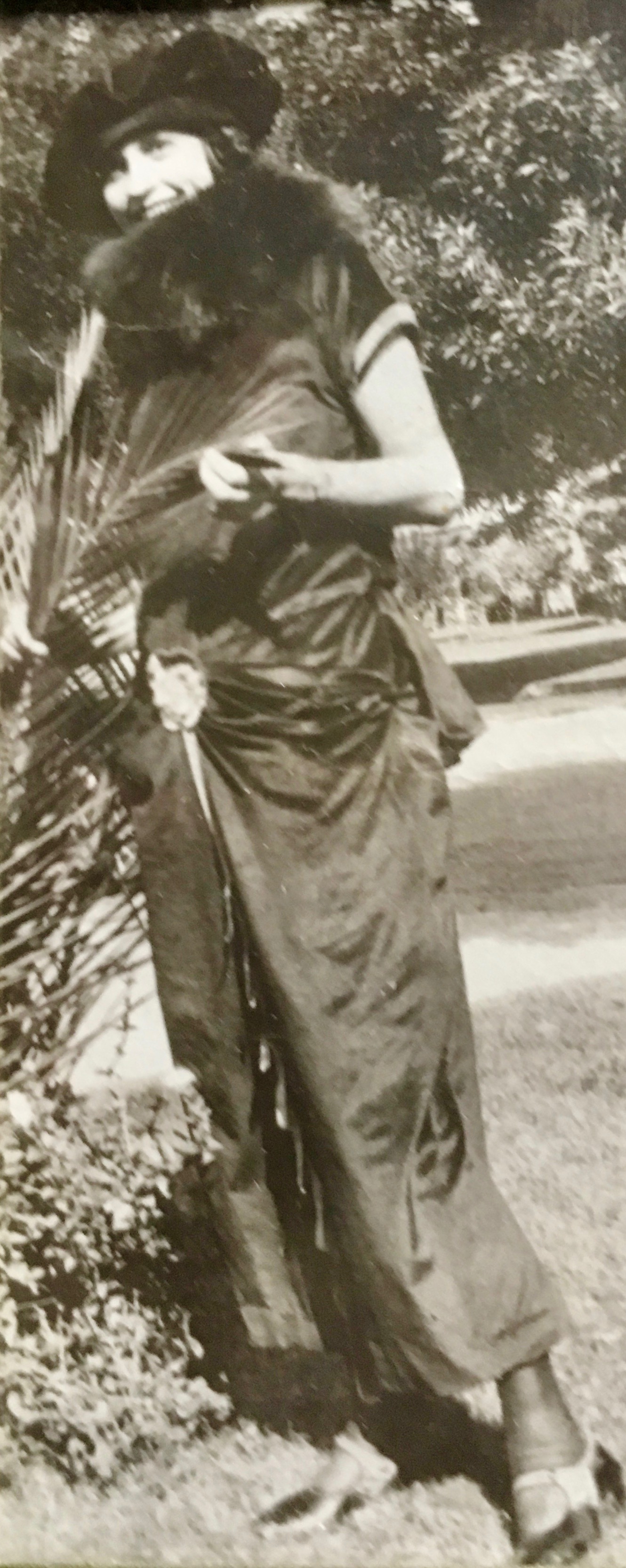
Born 1900 in Spring Valley, Illinois of first generation immigrant parents from Poland. She had no idea what was ahead of her.


Friends In Oaxaca
June 28th, 2017Here in Oaxaca I think I know more local young ones than older ones. Of course it helps that the younger locals often speak English even if just a little and between my Spanish and their English we do fine. And they are happy to practice English. In fact yesterday 4 young art students came to study using my free wifi. I gave them some beer and put on some New Zealand reggaton. It made them happy. And we practiced speaking a bit.
It’s really interesting to be able to get young views of Mexican culture vis a vis the different generations here. And what they think about Mexico and the hopes and fears they have for themselves in the future. Being young they are more open to discussing the more controversial aspects of the culture and the politics here with someone they feel safe with. I try to be as explicitly unbiased as I can and just listen.
Most of the younger ones I know are really into self-sufficiency. There is a round table at the Universidad de la Tierra that was established by Gustavo Esteva each week. A few years ago, he took about 25 students to four countries for a year…to study local self sufficiency methods…Thailand, New Zealand, Tanzania and the last being Oaxaca. And to stand their patronizing do-good mind set on it’s head. One girl from Texas I hosted almost had a breakdown on the program because it confronted her whole do-good world view. We spent hours debriefing. A couple years later she returned to Oaxaca with her Caribbean boyfriend and they stayed with me. Another one on the program was Malaysian who had been going to school in Maine and I got to stay with her and her parents in Kuala Lumpur and even meet her Chinese grandparents who had been quarantined during the war by the Japanese. I didn’t even know about the Japanese in Malaysia during the war!!!
Meeting those kids, because I hosted some of them through Couchsurfing, was so enriching because I already had been reading about the work that Gustavo and Ivan Ilych did together on “unschooling” when Ivan was still alive. Gustavo is in his 80’s now and not well so you don’t see much of him around. He has written extensively.
Gustavo has had a most interesting trajectory. Grew up in a Zapotec family in the Etlas in Oaxaca. Got a good education. Studied at Harvard. Worked as an exec for Coca Cola, got a high up job in the Mex govt…then one day he went back to visit his Zapotec grandmother and saw clearly for the first time how integrated or not the culture was with their economic survival in a neoliberal world. He did a 180 and has been fighting neoliberalism ever since. And opened Universidad de la Tierra in Reforma focusing on self sufficiency.
Why I Prefer Oaxaca
June 28th, 2017 We expats are finding what we did not find “at home.” I retired in 2002, traveled for 5 years, went back “home” for 2 months and was bored to tears. Most of my friends had moved on (or I had moved on). I was just going back and forth between the computer and the TV. I thought, I could just die here in this chair! Where are you going to go…the mall? Similarly, my son married a Thai who was used to colorful life on the streets and brought her to the states on a 3 month tourist visa to see how she would like it. She hated it and went back a month early. I understood completely. Many of the comments I hear here I also hear from expats in Thailand.
As for why I am here and not somewhere else…I lived with a Mex-American family for 4 years of high school and then worked on behalf of the migrant community for 30 years…most of whom were from Oaxaca and for the last 10 years developed and administered a violence prevention/alternative ed program for Latino high school dropouts. I loved the families we were working with from Oaxaca and mentored several of the girls from the Mixteco. I wanted to come see the culture where they all were from and what made them who they are. 10 years later I am happily still here. But it is sad that we cannot find an authentic culture at home and have to “borrow” someone else’s.
Why I Host Strangers
May 3rd, 2017I’m all for volunteering but I spent half my life doing it so I’m kind of od’d on it. Hosting through Couchsurfing and other hospitality sites is a kind of volunteering with my time and money but I get more back from it. And I don’t have to negotiate anything with anyone except my guests! 😉
Being travelers and interested in new experiences and cross cultural understanding, we are usually on the same page even as different as they are from me. In fact the more different the better. And the older ones have a perspective the young ones don’t have.
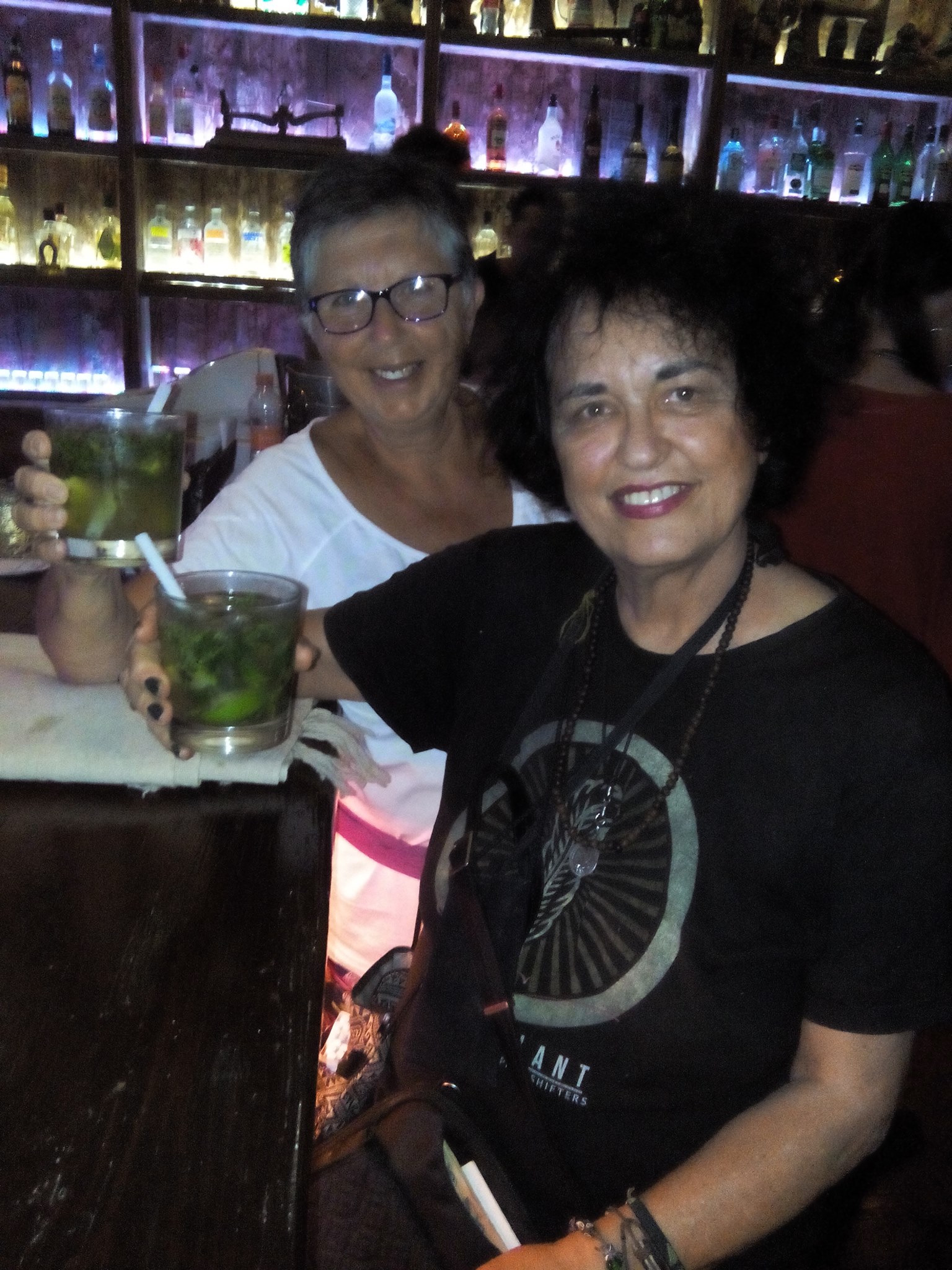
I recently hosted Annarita, 60, an Italian who has been living in France for years and who shared her perspective on the Euro situation just before the election there. And being an observer here for 10 years they are usually interested to hear about an outside view of the political situation here. The rest is up to them.
I usually share my videos of the 2006 uprising. It gives them a bit of a different perspective as they walk around the city among the locals. And of course being an expat I try to introduce them to as many locals as I can even if it’s just someone they can go clubbing with. And I get to follow half of them on FB afterward. I’m still messaging with guests I hosted years ago.
Hitchhikers Found Me!
April 29th, 20176 degrees of separation! 🙂 I am found by these hitchhikers!
Posted by Zoe Goetz on Sunday, April 16, 2017
Two Italians and a Pole. Anna and one of the Italians hitched a boat across the Atlantic! This is the 2nd I’ve had who did this. The first was a Brazilian.
Emergency Trip To Salem
March 31st, 2017Lost my iPhone! And locked out of iCloud and email! But most of all family and businesses lost access to my phone number! But I lucked out this time. Weather is mighty fine! Sleeping in Doug’s trailer at the farm with Oso (his dog) plastered against me under the covers! It will be a relief to return to Oaxaca on May 10th.
San Cristobal Chiapas
February 25th, 2017Couple days after arriving in Oaxaca from Oregon on February 4, 2017 an old friend who we lived next door to in the 60’s in Los Angeles flew down to visit me. We barely were settled and off to San Cristobal on the plane…first to Tuxtla and then SC by bus and then returned on the 15th.
San Cristobal has completely changed since I was here last in 2006. I was shocked. Walking Streets weren’t there. Now the city is filled with Europeans, coffee shops and boutique cafes. And I thought we were going to freeze to death with no heat in the restaurants nor the guesthouse. I was so happy to get back to warm and lovely Oaxaca!
My Russian friend, Ksenia, suggested we go to Chamula, a small town about 30 minutes outside San Cristobal, where the Mayans only enter the church to sit with a Curandera while she performs a healing ritual. One Curandera used a chicken to gently swipe a prone child back and forth and then gently squeezed the neck of the chicken until it was dead. The bad spirits had entered the chicken and the family took it home with them. No cameras were allowed in the church.
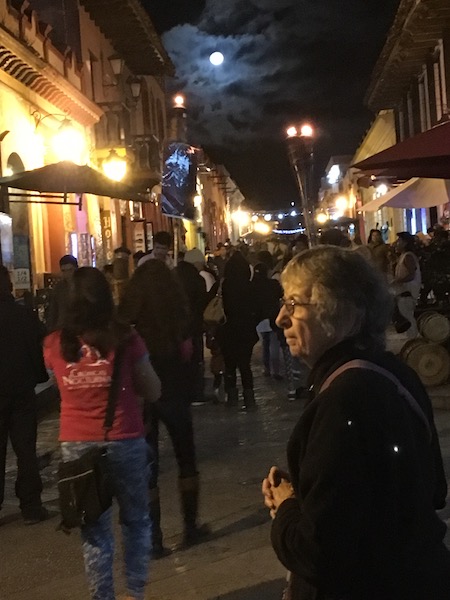
Suzanne Siegel
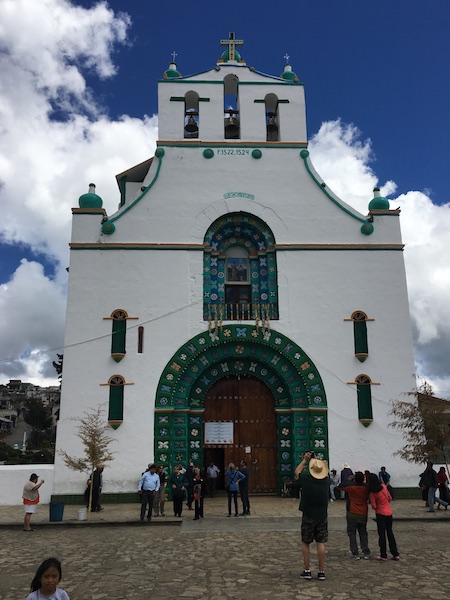
Chamula Church
The U.S. Is A Mess!
February 8th, 2017Got back to Oregon in the middle of an ice and snow storm on Jan 5. The Lexus was sliding all over so had to rent an SUV. Had no idea it was so expensive to rent a car in the U.S.!
Bob flew up to Salem after spending 6 weeks in Las Vegas recuperating from his hip replacement. We spent 2 weeks in an AirB&B…which I wouldn’t do again. Weird being in someone’s house when you are not the guest.
Then spent 5 days with my dear friend Patty after which I moved to the cozy little “Nomad,” one of Doug’s trailers out on the farm.
So a month in Salem spent with a doc appointment, taxes and meeting with the Estate Attorney to redo my will. And a thousand other things among which was getting estimates from geologists to reinforce the house and keep it from slipping down the hill.
I was in Thailand during the election so I could just ignore it and pretend it didn’t happen. But back in the U.S….
Christmas In Chiang Mai
December 26th, 2016November and December 2016
After a month in Bangkok and a 5 day visa run to Hanoi, I’ve been in Chiang Mai with Doug since November 21. We are staying at the Smith Residence and I have a great view of the sunrises over the city from my 6th floor balcony.
“I take care mama,” says Doug in a Thai speak accent. I open the door each morning to see a smiling face as he holds out something for me to eat…pastry, fruit or a Thai dish he has made himself in his balcony kitchen which is basically a sink. But he bought an electric wok and a little charcoal grill to grill meat and fish. We both have a water kettle for morning coffee. It’s remarkable what he is able to cook up.
My Christmas present to Doug was a fancy buffet dinner at the Le Meridien Hotel.
Meanwhile, Bob has been with Greg in Las Vegas while he recuperates after his hip replacement there last month.
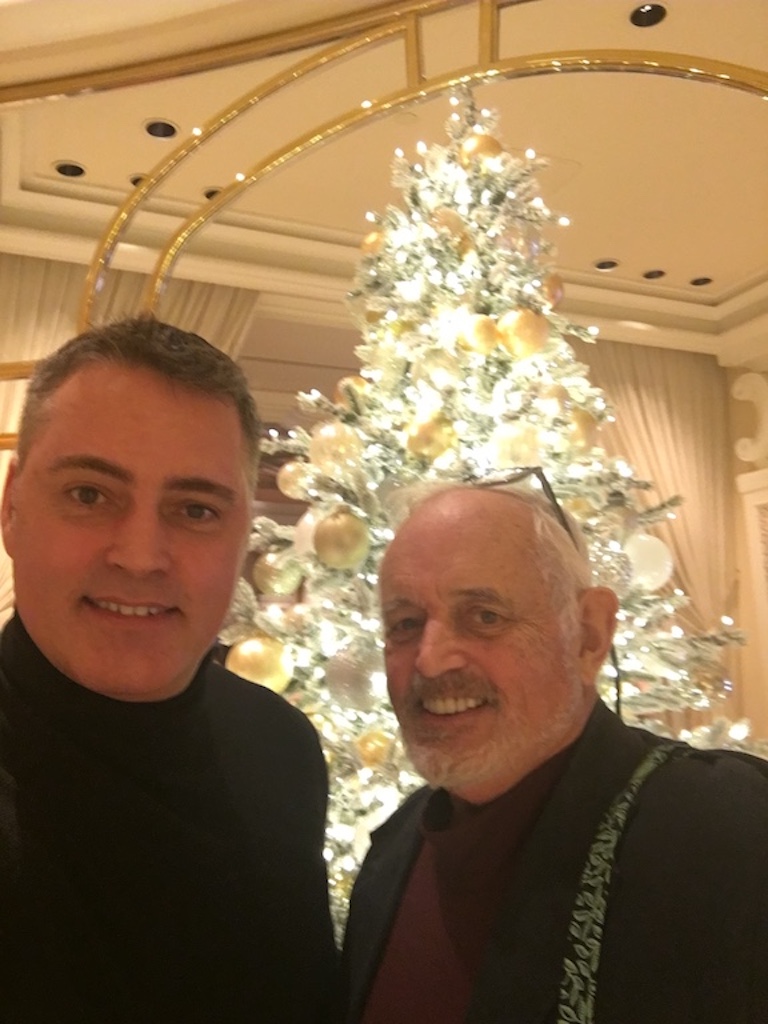
A “Conversation?”
December 20th, 2016Amazing things you see. A SE Asian man and an older Thai woman at the next table in the breakfast room of my hotel. For 30 minutes now they both have been talking over each other with no let up. I’m fascinated to see how long they keep it up. Not for one second has either of them stopped talking!
How do they know what to say next?!
Meanwhile in Hong Kong
December 14th, 2016
Josh And The Shank
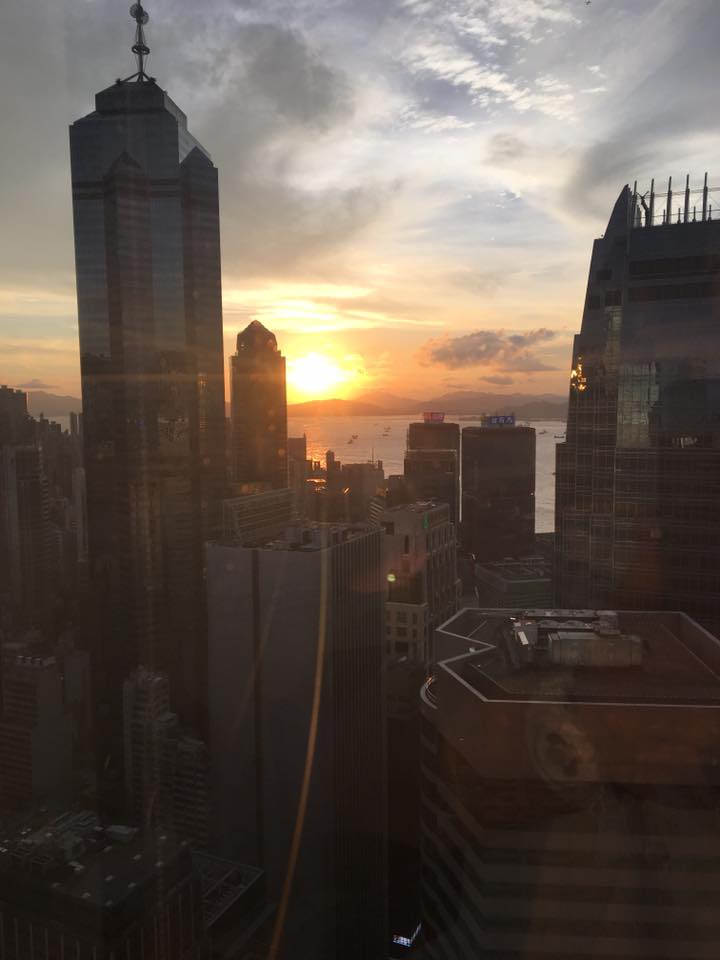
Hong Kong Office View
Smith Residence Chiang Mai
December 14th, 2016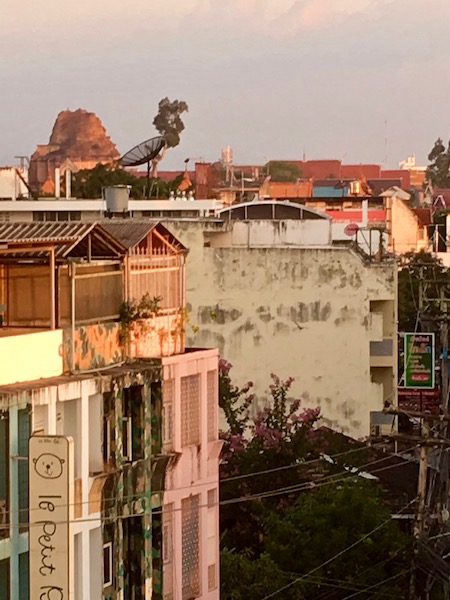
6th Floor View

Second larget Thai city. Typical. Ancient monument next to house, next to big apartment building.
Chiang Mai Mountain Men
December 8th, 2016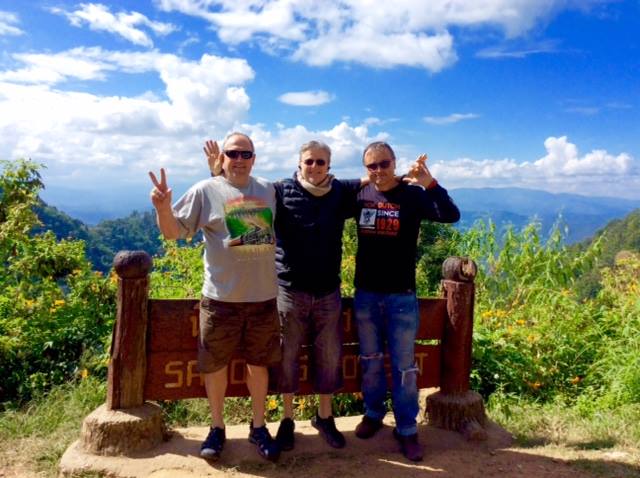
Doug and friends
Down Time In Chiang Mai
December 6th, 2016Down time is lovely…and necessary. Ensconsed in my Thai style guesthouse by the Ping Rver, I connected my little bluetooth speakers… listening to Lou Reed’s “Perfect Day” and of course Leonard Cohen who always puts me in a reflective mood.
There is a song…”you take the weather with you.” You are already “home.” The place doesn’t matter. You just have to put yourself somewhere. But I can’t imagine being in one place year round without getting out periodically and meeting strangers on the road who are on the same wavelength and who I’d never meet otherwise. Intimacy is anywhere there are people. And people tend to share more personal with people who they think they probably won’t see ever again. However I’ve had more than my share of serendipity coincidences meeting people again in another country.
Requires a little travel money. And mobility. With a little heart thrown in. But even in a wheelchair airports are manageable. Give a little tip to the employee who whisks you right through security and immigration and to the gate. And to the restroom or ATM and whatever else. Even to the next terminal. Even up to the plane in a hydaulic lift if you need it. Along with all the ancient and infirm Chinese ladies!
One of the most inspirational experiences I’ve ever had was meeting an 80 year old Russian Jew from NYC with a cane in the mountains of southern China visiting the Miao people who nearly fell getting out of the van. Said once a year he goes somewhere. I blessed his heart.
OMG! Thais Are Crazy To Drive You All Over Thailand!
December 5th, 2016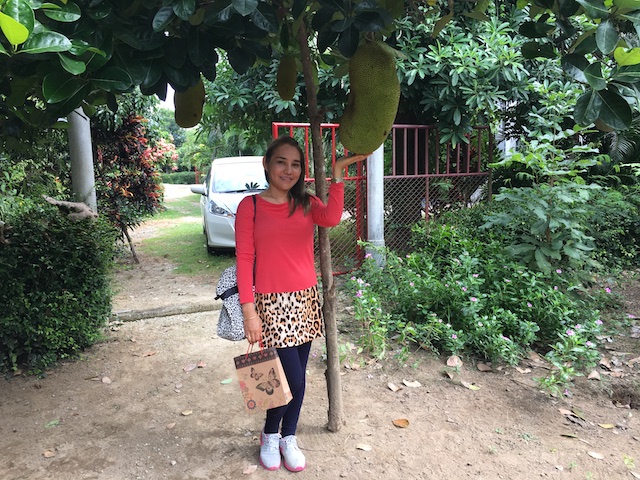
Tina at her home In Chom Thong

Bottom of Waterfall
Doug, my son, and I have been here nearly a month and to get out of busy Chiang Mai for a day we were supposed to be driven to Tina’s home in Chom Thong about 3 hours in the countryside. Tina is the gf of a friend of Doug’s. But oh no, as if this wasn’t enough driving, she had to take us to a waterfall up a winding road on the way! Doug got sick and with my back and leg I couldn’t even walk up to the waterfall. There were hordes of people because tomorrow is Father’s Day and this was a long weekend. Then she wanted to take us all the way to the top of the mountain! Noooooo Doug and I yelled!
Then further on the way to her home she wanted to take us clear to the top of another mountain where we could see a temple at the top! Noooooo! We yelled again!
We felt bad. Tina was just trying to pleasure us! What made it worse was that she, a Thai, only paid 30 baht for her entry fee and Doug and I, foreigners, had to pay 300 baht each for our misery! That is about $8.50! Dual pricing for foreign visitors all over Thailand! I’m surprised they didn’t make us pay for taking photos. But without cameras, thank goodness for superphones! 😉
We were so relieved to get to Tina’s home town outside of which we walked among the houses of all her family members. She pointed out all the different interesting fruit trees and herbal plants they use in cooking and healing. Took a photo of her holding a huge Jackfruit hanging from a tree.
I remembered a friend of mine in Salem who was in the Peace Corps in Thailand in the 70’s and who visited good friends on a subsequent trip to Chiang Mai. She said she spent almost the entire time being driven around in a car!!! What is it??? I shall remember this when people come visit me! 😉 An hour is the max!
Chiang Mai
November 29th, 2016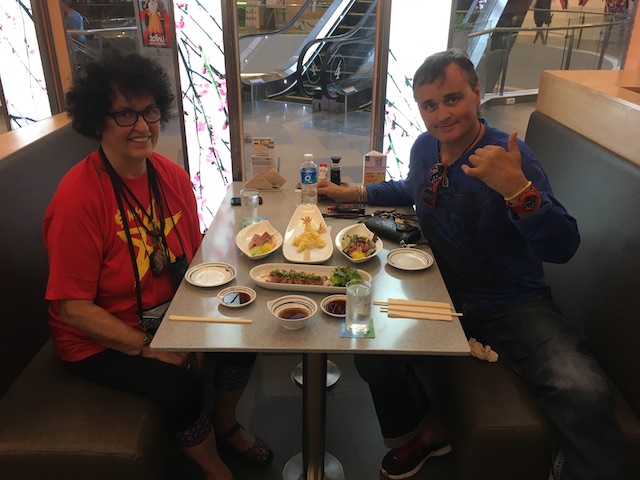
Sushi in Maya Mall
On November 21, I flew from Hanoi to Chiang Mai where I am staying at the Galare Guesthouse on the Ping River where I’ve stayed before. Doug is here and we’re hanging out together. After a month I’ll move to the much cheaper Smith Residence where Doug is staying until he flies back down to Koh Samui. I’ll fly back to Hong Kong on January 2nd and bunk with Josh and Polly until the 5th when I fly out to Portland, Oregon.
.
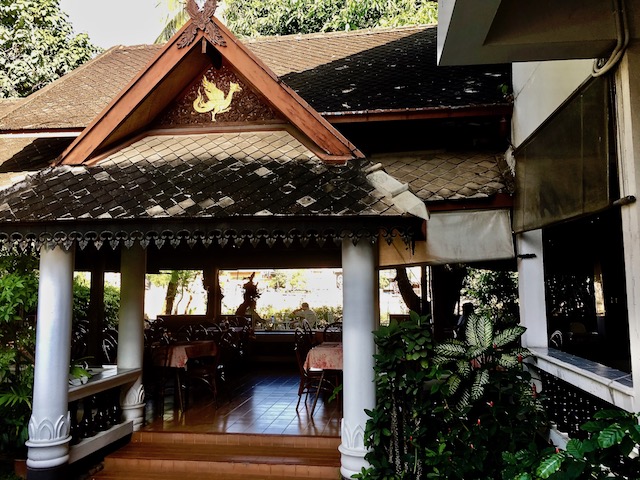
Galare House
Hanoi In Black & White
November 14th, 2016
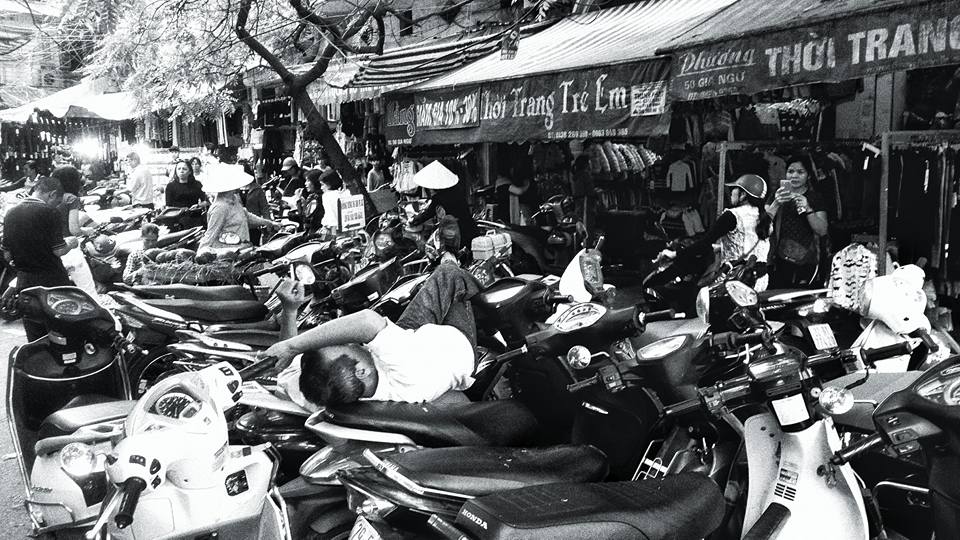
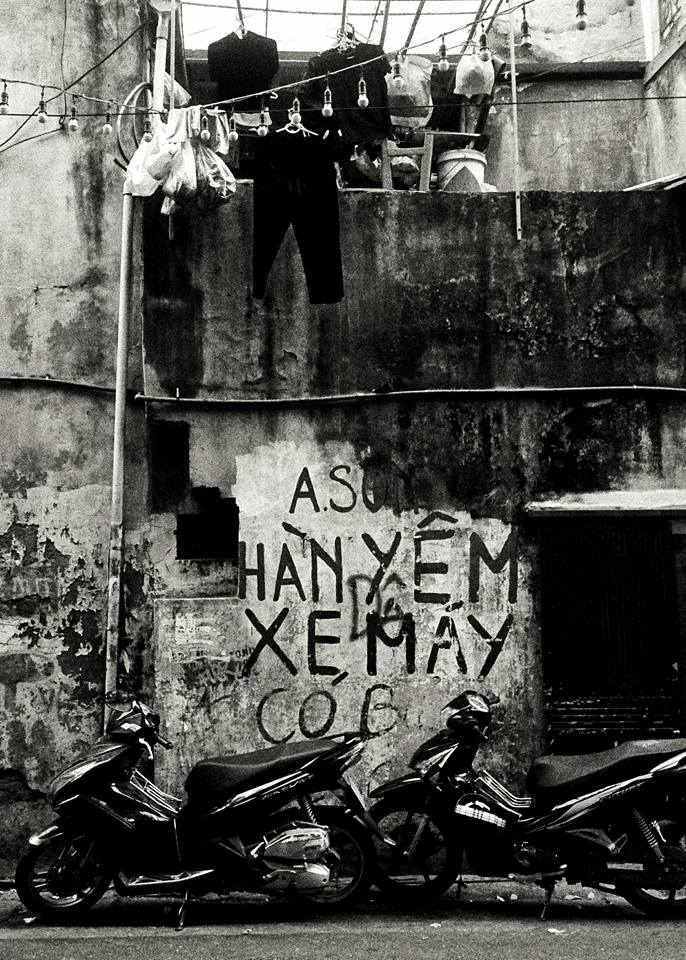

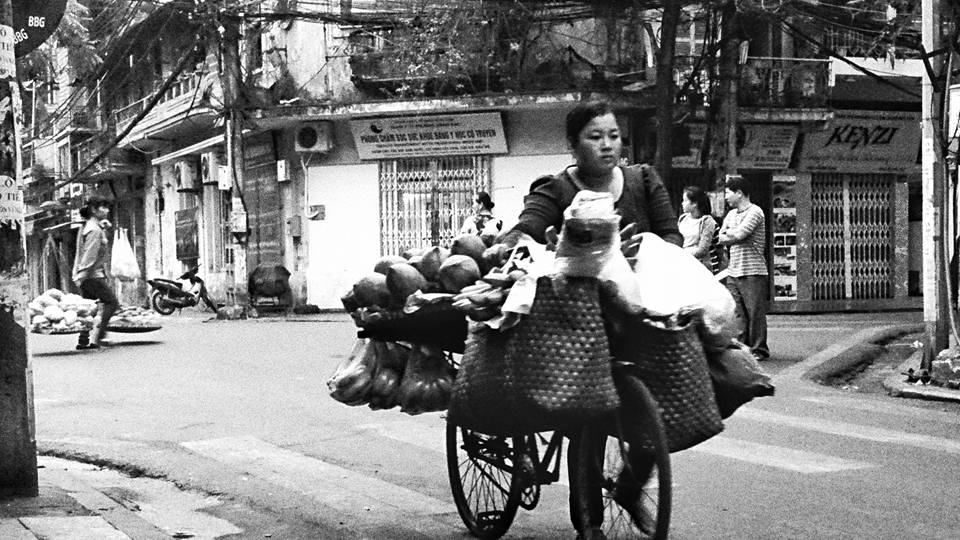
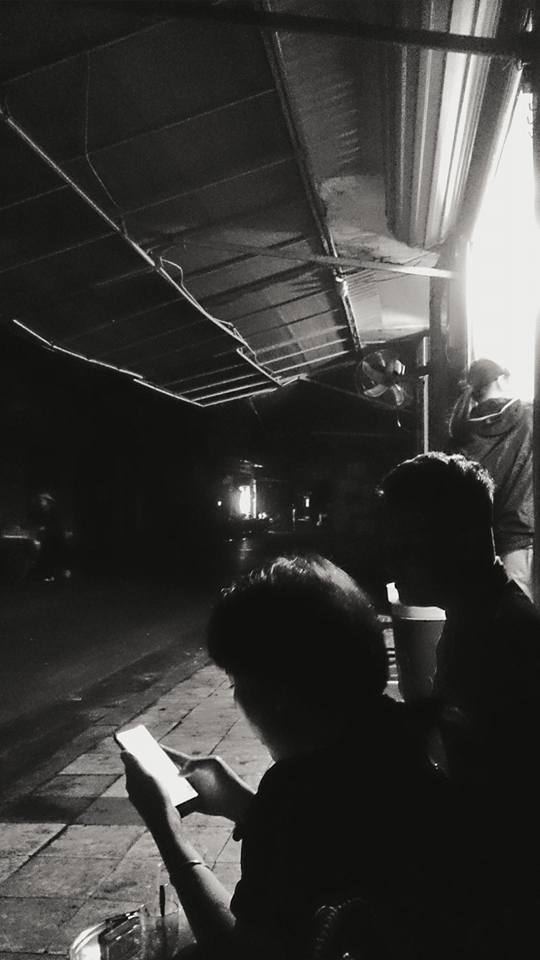
Photos courtesy of Andrew, a teacher friend in Bangkok.
Hanoi Visa Run
November 14th, 2016
Having flown into Thailand without getting a visa beforehand, I only had a 30 day tourist visa. So I flew to Hanoi using the convenient online Viet Nam visa application and stayed at the Paradise Boutique Hotel in the Old Quarter for a week. For $40 for a visa stamp they met me at the airport and scooted me through immigration. For an extra fee they even met me at baggage claim and took me to my hotel in a van. So different than the old days!
My old haunt, the Classic Street Guesthouse nearby had tripled in price since I stayed there last. And the Tamarind Cafe is no longer there…replaced by another. To my surprise I found a new Mexican Coffee Shop and Cafe…the name of the shop is Xupito! Pretty close to chupa pito!!…!!!!! (which means suck dick!) Jajaja…really…change the Xu to sh/chup pito. Or Xupito could just be referring to a drunkard who drinks a lot.
Paul, a former couchsurfer in Oaxaca, is in Hanoi where he started The Bamboo School to teach music to young kids in the countryside and is playing gigs with his sax and electronic boards around the city. This is the second time we’ve run into each other in SE Asia…the other time on the street in Bangkok. I love it!
The streets are much busier than before…especially in the Old Quarter where sidewalks are taken up by people selling and cooking and eating where there aren’t parked motorcycles so that you have to walk in the congested street.
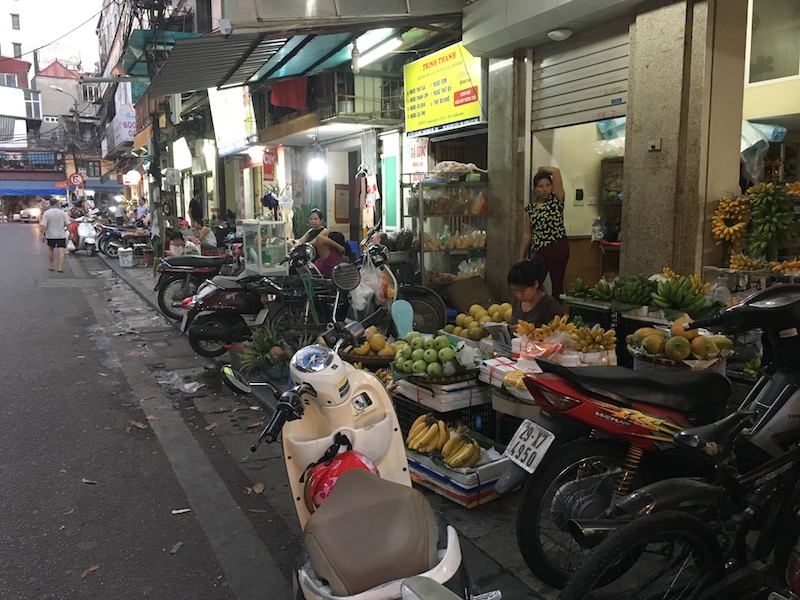
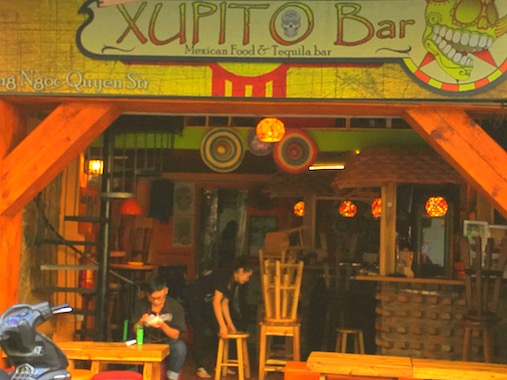
Look What I found!
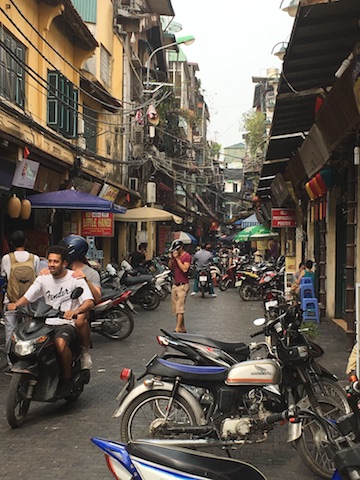
Busy Street

Paul..Former Couchsurfer in Oaxaca
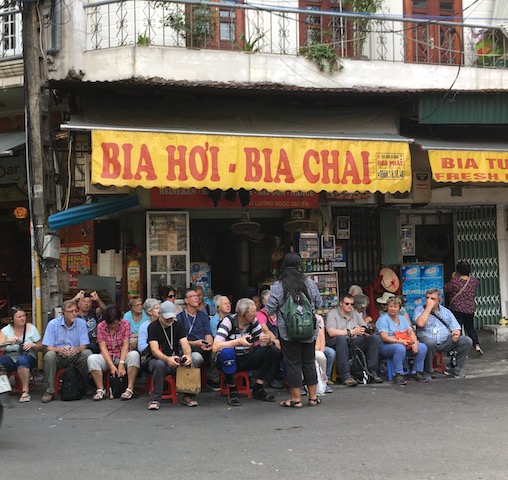
The Germans in Hanoi
Hua Hin
November 12th, 2016After Doug flew in to Bangkok on November 8, he and I took a run down to Hua Hin for a couple days and stayed at a resort on the beach a couple days later.
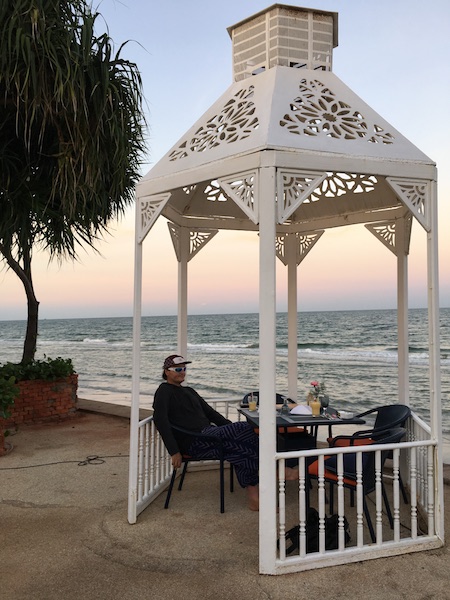
Hua Hin Resort
What I Do By Myself All Day In Bangkok
October 29th, 2016After the wedding in Hong Kong, I flew to Bangkok on Oct 17. Stayed in the Dvaree Bali Serviced Apartments down an alley off Sukhumvit 22 where I’ve stayed several times before and can hang out with the guys (expats) at the Parrot Cafe up the street on 22.
Bob, my husband, left his Mia Noi for a few days to spend time with me in Bangkok. Took me to an Italian basement kitchen where they were having a half-price promotion on the food for the month of October. We shared a meal. Osso Bucco with lots of marrow. I absolutely love bone marrow. When Josh was Sous Chef in Manhattan we would go out at 2am where many of the chefs would go after work…the Blue Ribbon. The place specialized in 10 inch long beef bone boiled in herbed broth and then roasted and standing on end on the plate. They served it with long ice tea spoons. With toast and marmalade. OMG my mouth is watering.
Read the rest of this entry »
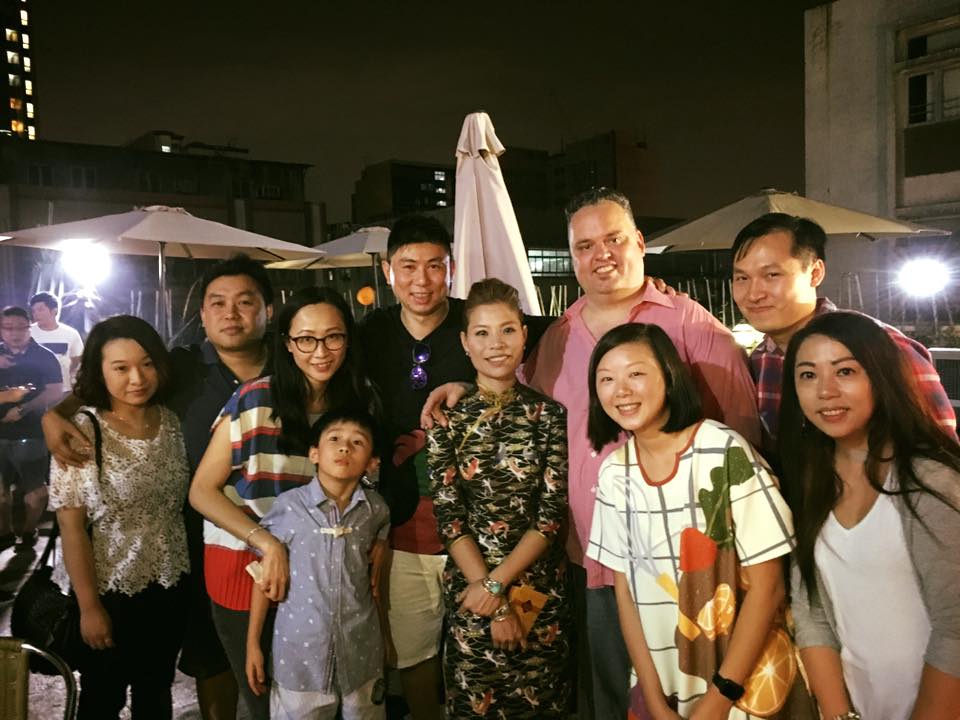
Roof Top Wedding Party in Kowloon
October 27th, 2016Sorry I missed the do it yourself rooftop BBQ party in Kowloon with about 50 of Josh and Polly’s friends. Was exhausted with jet lag so went to bed early. Sigh.

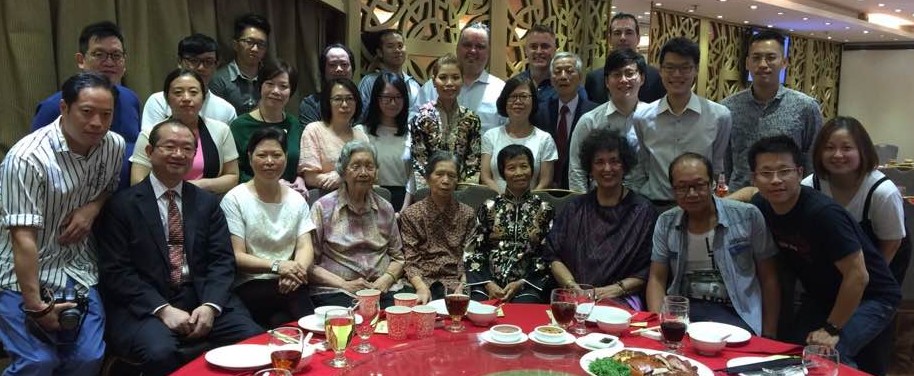
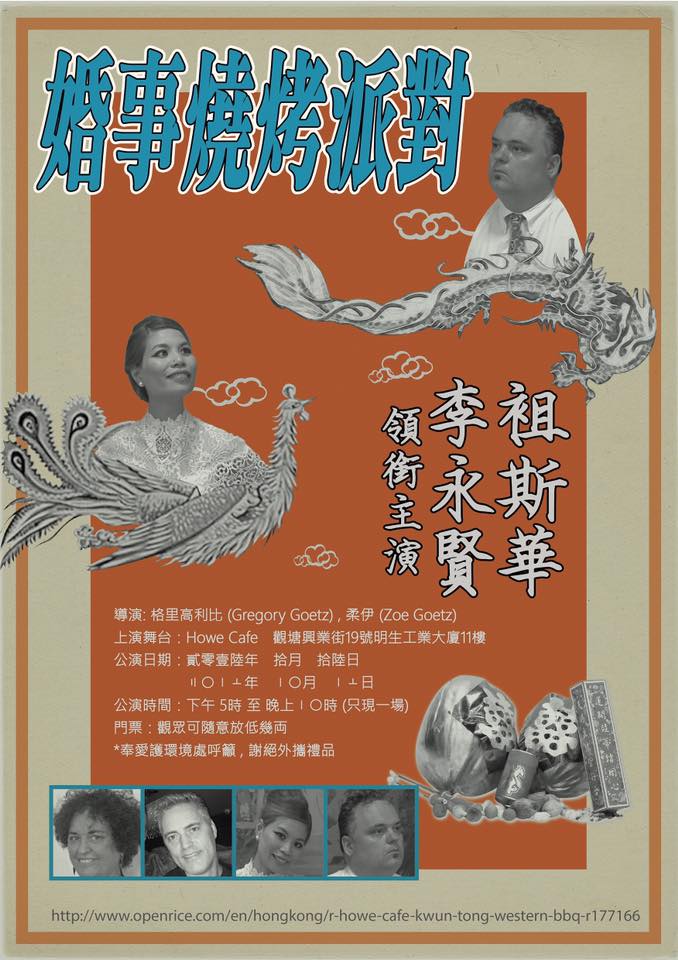
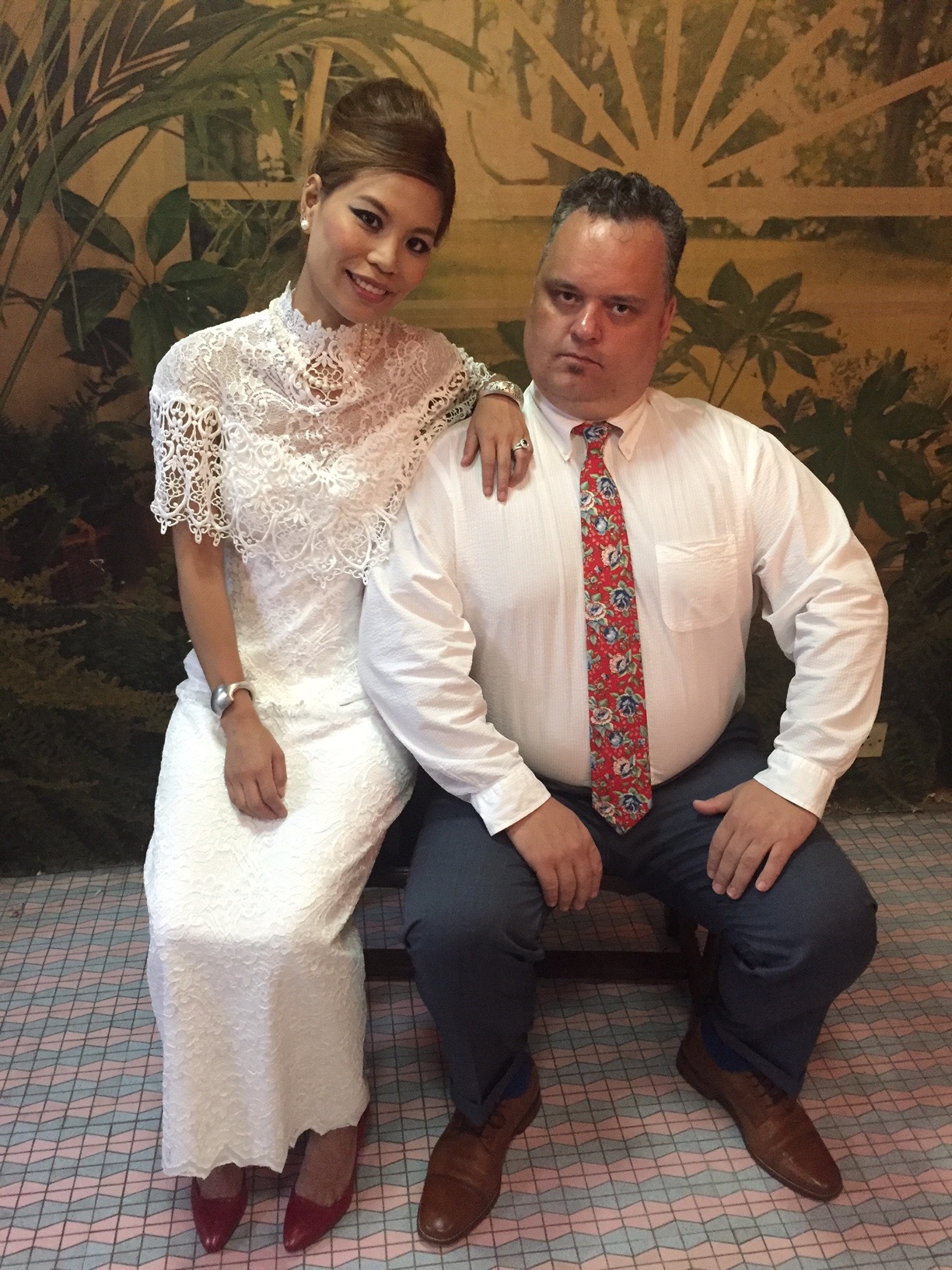
Joshua Goetz and Polly Li Getting Married!
October 27th, 2016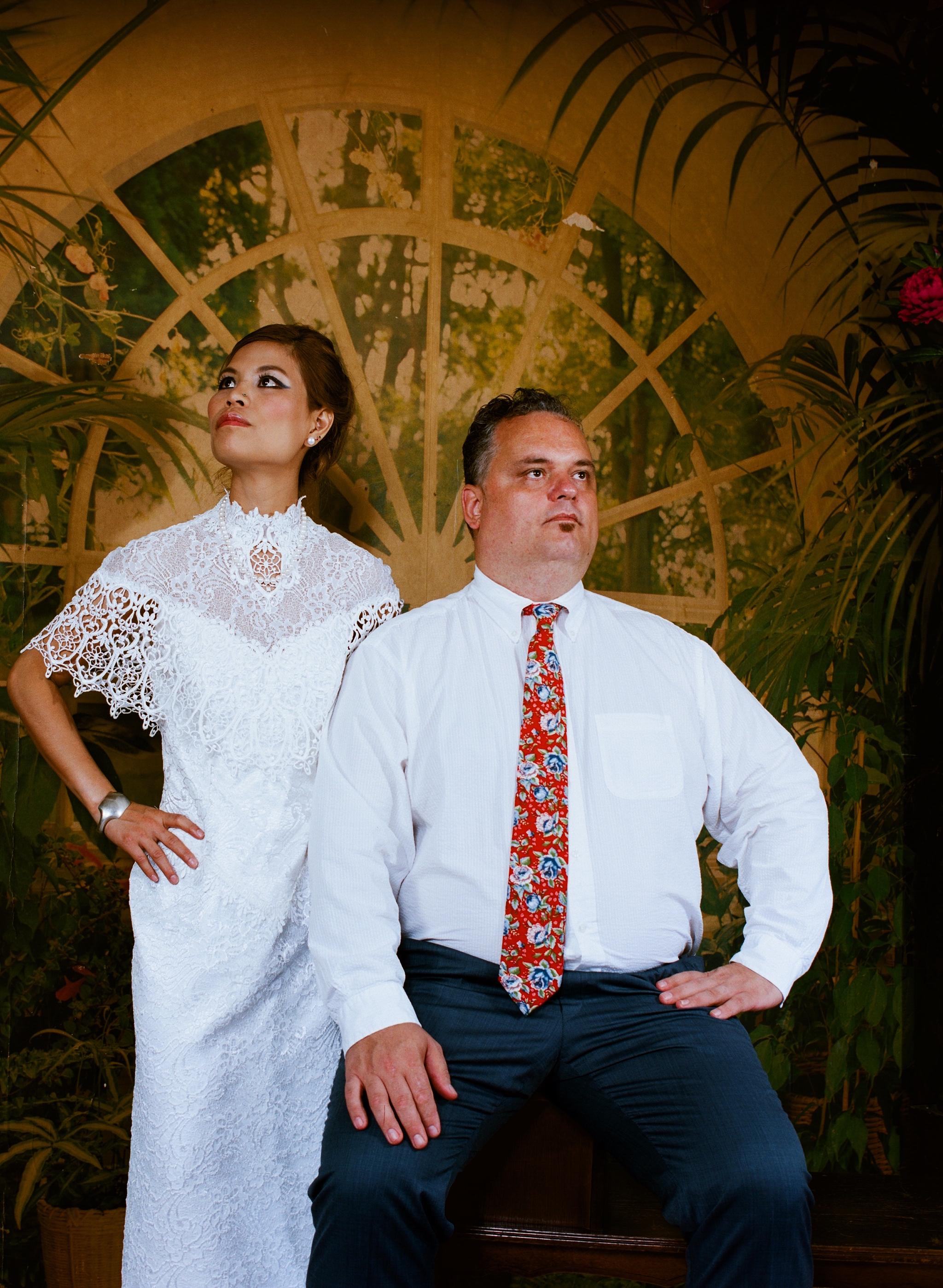


-

- Josh and Polly

<

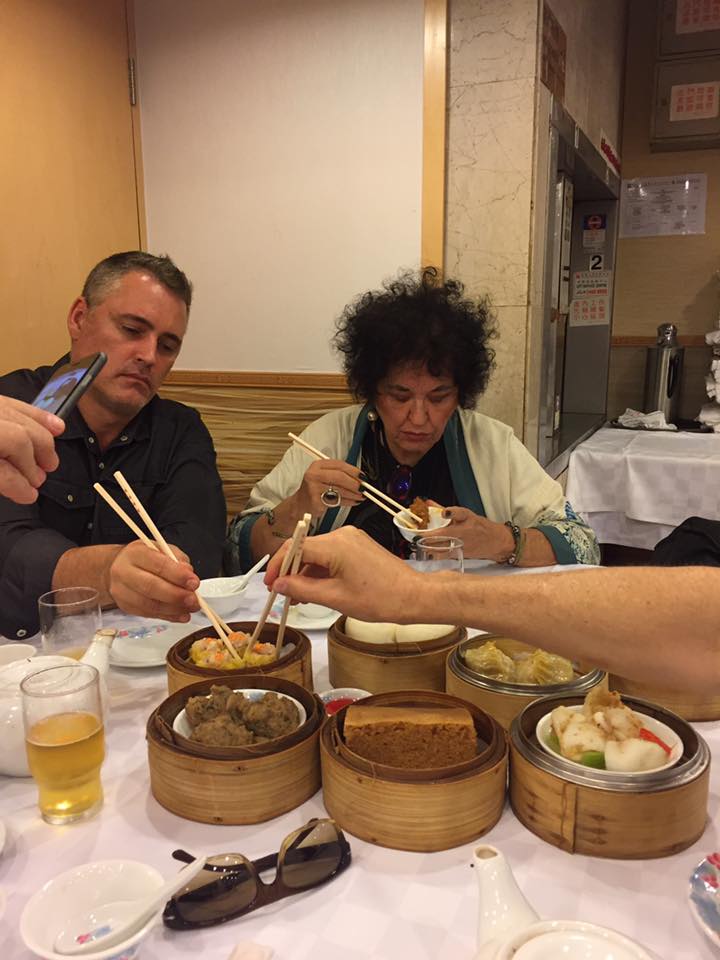

Mainlanders Jump The Queue!
October 14th, 2016Well, that was entertaining! After dinner Polly got in a verbal fight with some mainlanders who jumped the taxi queue. Learned a lot of bad words in Cantonese and Mandarin tonight! There is no love lost between mainlanders and Hong Kongese. Didn’t know Polly could holler that loud!
So far hanging out with Josh while Polly works and napping while Josh runs errands.
Had sushi last night with J & P. God, everything is so expensive! I paid for sushi in a less than fancy place. About $250 for the 3 of us! I’m not used to this! Oh well!
Greg and his friend, Jeff, fly in this morning. We will do Dim Sum for breakfast.
Then Josh will take Greg and Jeff on a walkabout while I nap some more.
Tonight is dinner with Polly’s family in a posh restaurant.
Tomorrow is the civil ceremony and then breakfast with Polly’s family.
Tomorrow night is a BBQ in a Kowloon warehouse roof top loft with Greg and Polly’s friends.
Back To Hong Kong!
October 14th, 2016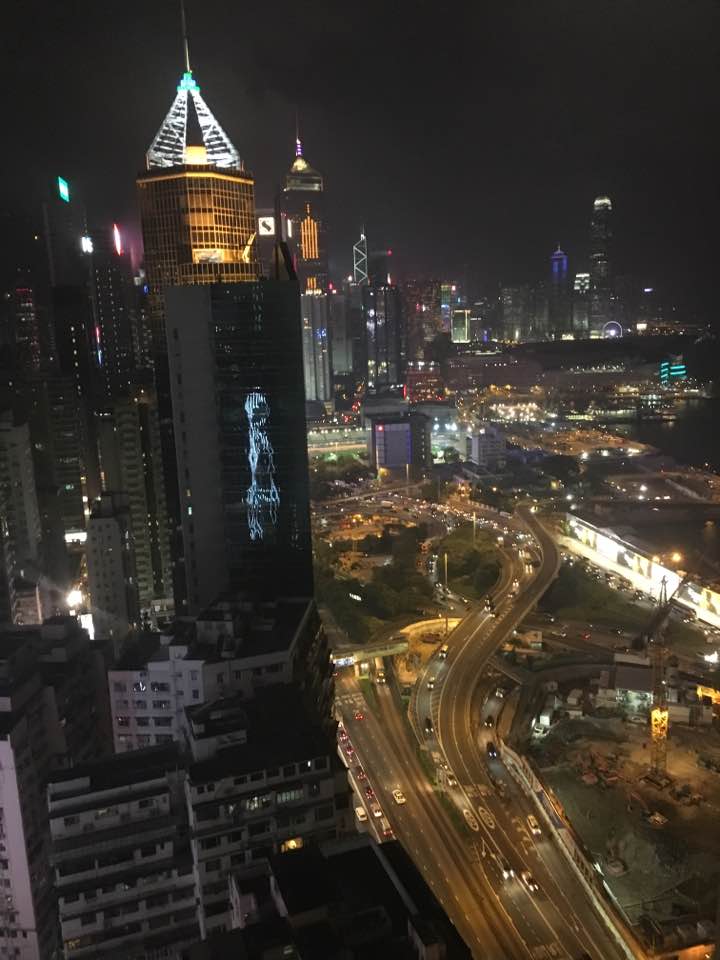
Out To Dinner in Hong Kong
24 hours and 4 planes to Hong Kong from Oaxaca for my son Josh’s wedding to Polly Li.
Conflict
June 29th, 2016If different tribes, cabals, ethnic groups, national groups, religious groups stick to apriori arguments then there will be no end to it.
It’s only when they agree to find common ground while they work together to solve a problem that they have any chance to learn to understand each other.
 Zoe
Zoe